Habits
Eating for hair when you are living on the kids’ leftovers
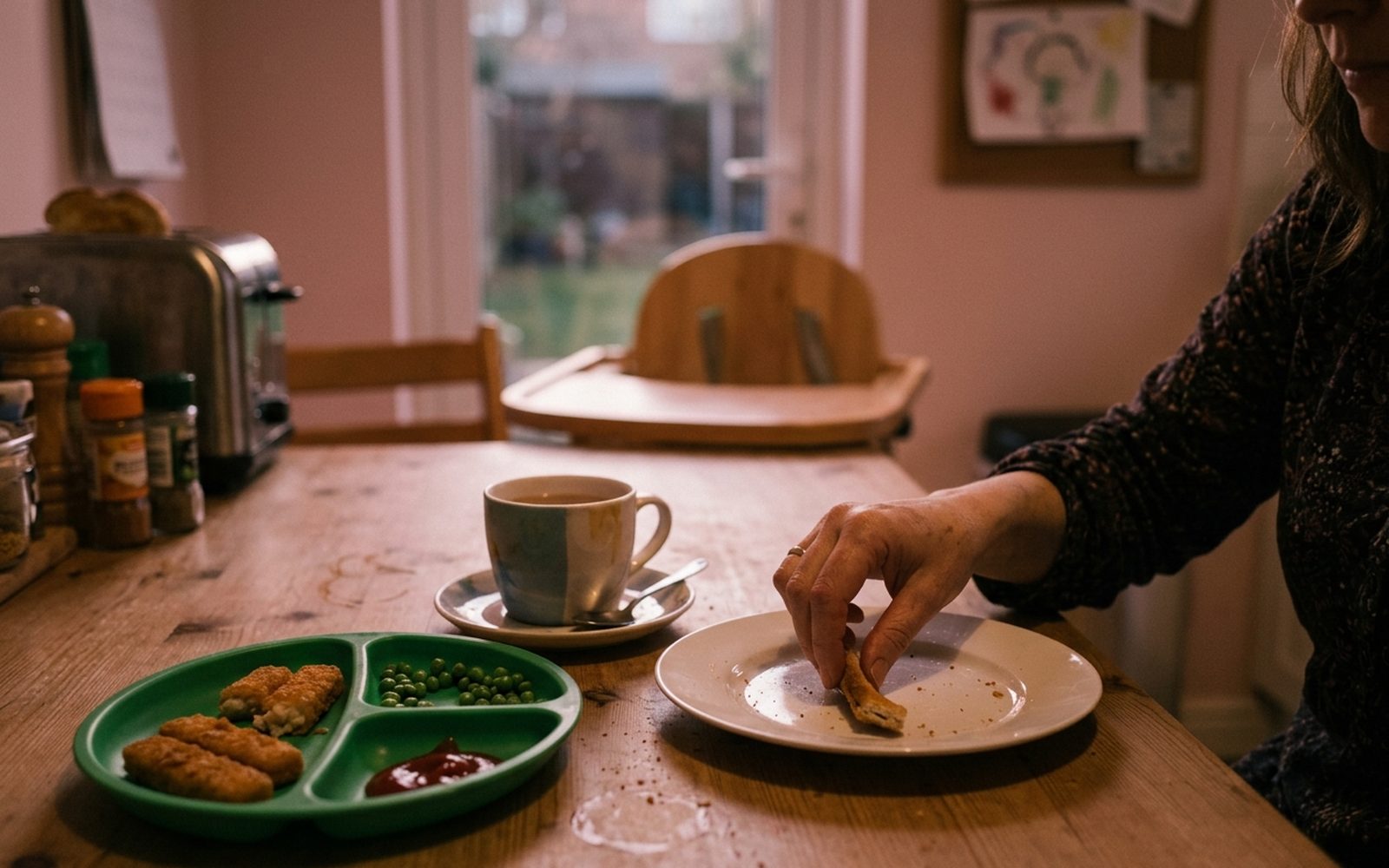
I do not think most mums realise how badly they eat. Not in the sense of eating badly — in the sense of barely eating. Breakfast is the toddler’s toast crust, lunch is standing up, tea is whatever was refused. It adds up to a diet low in protein, low in iron, and low in the fats the follicle uses to build a hair. Nobody diagnoses it because the scales look fine.
What a hair is made of
Hair is almost entirely protein — keratin — built from amino acids, with iron delivering oxygen to the follicle, zinc running the enzymes that assemble it, and a handful of vitamins doing the rest. The follicle is one of the fastest-dividing tissues in the body. It needs a steady supply, and it is also one of the first things the body rations when supply is short, because hair is not essential to survival. That is why nutrition shows up in hair before it shows up anywhere else.
Protein: the one you are almost certainly short of
An adult woman needs somewhere between 60 and 90 grams of protein a day depending on her size and activity, and more if she is breastfeeding. A slice of toast has four grams. A handful of the children’s pasta has five. A mum who grazes on leftovers can easily get through a day on thirty, and a follicle on thirty grams builds thinner, weaker hair and cycles slower.
The fix is not a separate meal. It is a protein anchor in each of your three eating moments. Morning: two eggs, or Greek yoghurt, or a protein shake in the coffee. Midday: a tin of tuna or a pot of cottage cheese on top of whatever the children are having. Evening: whatever protein you cook for the family, but a full adult portion of it for you, eaten before you clear the plates. Twenty-five to thirty grams three times a day is the target; it is the single most effective dietary change for hair.
Not sure which one is you?
Take the two-minute hair quiz
Twelve quick questions. We tell you what we think is going on, what to do about it, and we say so if it is something we cannot help with.
Start the quiz →Iron: the one that pregnancy took
Two pregnancies and a few years of periods can leave iron stores (ferritin) low for a long time, and low ferritin is one of the two big treatable causes of hair loss in mums. Food alone rebuilds ferritin slowly — months — but it does work if you are consistent, and it prevents the slide.
The iron in red meat, liver, sardines and dark chicken meat is absorbed several times better than the iron in plants. If you eat meat, red meat twice a week is the easiest lever. If you do not, lentils, chickpeas, tofu, pumpkin seeds and fortified cereals all count, and pairing them with something containing vitamin C — a satsuma, peppers, a glass of orange juice — roughly doubles absorption. Tea and coffee with a meal cut absorption sharply; have them an hour either side instead. If your ferritin is below about 30, food will not be enough on its own and a supplement is needed; the blood tests article covers the numbers.
The rest of the list
Zinc: meat, shellfish, seeds, cheese, wholegrains. Deficiency is uncommon on a mixed diet but common on a crusts diet. Omega-3 fats: oily fish twice a week, or walnuts, chia and flaxseed; these keep the scalp skin calm and the fibre supple. Vitamin D: almost nobody in the UK gets enough from October to March; a 10 microgram supplement is government advice for everyone and the follicle uses it. B12: only from animal foods or fortified ones, so vegan mums should supplement.
The eating pattern matters as much as the food
A follicle that is starved for sixteen hours and then given a large meal at eight in the evening is a follicle under stress. Long gaps without food raise cortisol, and cortisol shortens the growing phase. Three real meals, or three meals and a proper snack, is better for hair than one big one, and it is also better for the mood that the gaps are quietly ruining.
What supplements can and cannot do
Hair gummies are mostly biotin, which does nothing unless you are deficient, which almost nobody is. A general multivitamin with iron and vitamin D is a reasonable safety net on a chaotic diet. But no supplement replaces protein, and no supplement does anything about the follicle-level hormonal changes that most mums’ thinning is actually driven by. Diet is the floor. It is not the answer to a widening parting, and if you are eating well and the parting is still widening, the reason is at the follicle, which is what this article is about.
Ready to read your own pattern?
Take the two-minute hair quiz
Twelve questions. We tell you what we think is going on for you, and we say so if it is something a GP should see first.
Start the quiz →