Habits
Going back to work with hair that is not what it was

The end of maternity leave has a way of making every change of the past year visible at once, and hair is one of the first things women mention: the colleagues who knew you before, the office lighting, the meeting-room video calls, the sudden need to look like someone who has it together. This is not vanity. It is a reasonable response to being looked at again.
The first weeks
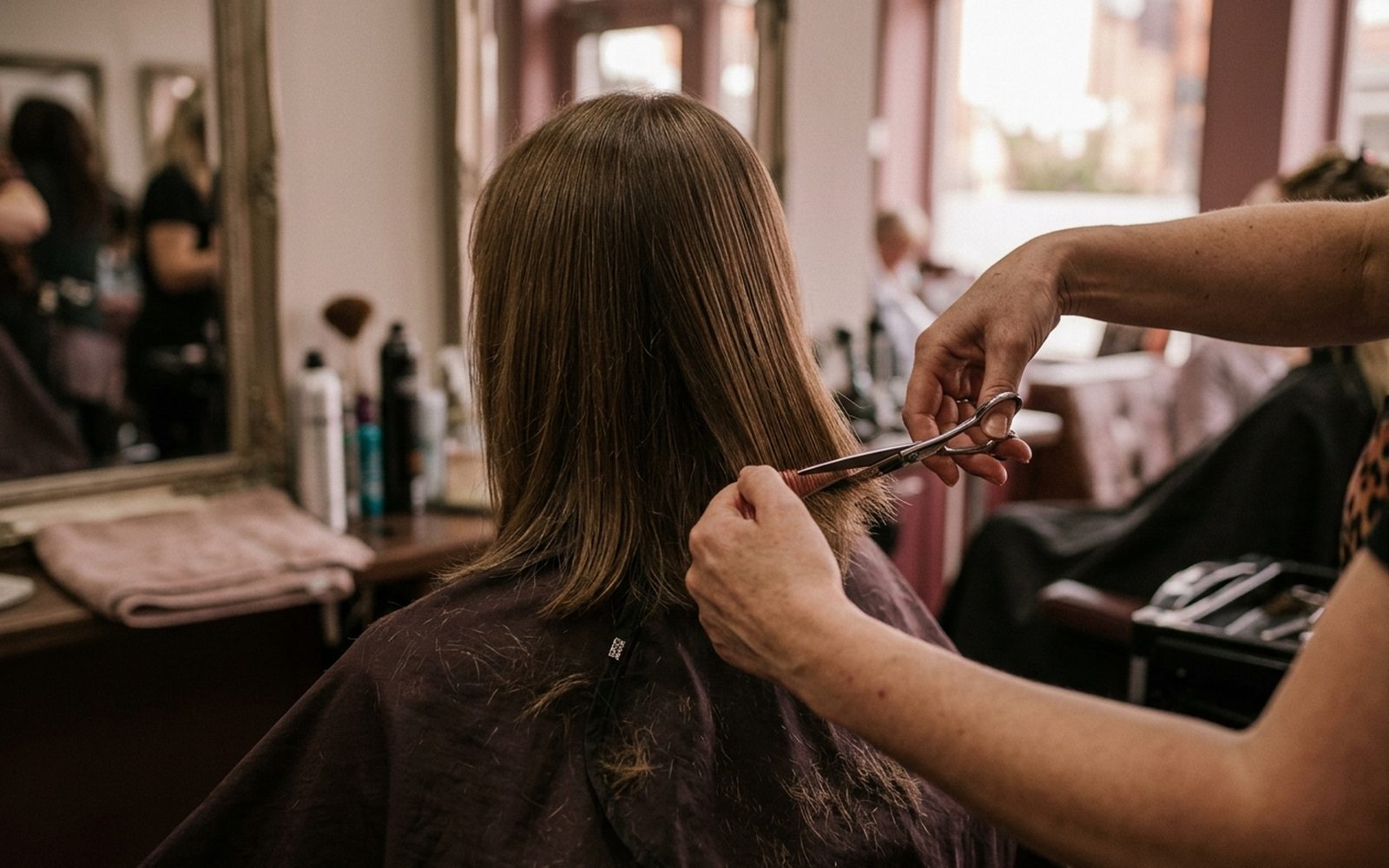
A good cut, a week before. Blunt ends, minimal layers, a length that goes up and looks fuller than it is. What to ask for. A root shadow or a slightly deeper colour at the roots if the parting is showing; it closes it visually for six weeks. More.
A morning routine that takes four minutes. Roots dried upside down, parting moved off centre, a root powder on the parting if needed, a low loose ponytail or a claw clip. Not a slicked-back bun; not straighteners on the hairline.
Video calls. Cameras at laptop height look up at the hairline and light from the screen flattens the front. Raise the laptop so the camera is at eye level, put a lamp in front rather than a window behind, and the parting and temples disappear from the frame.
Not sure which one is you?
Take the two-minute hair quiz
Twelve quick questions. We tell you what we think is going on, what to do about it, and we say so if it is something we cannot help with.
Start the quiz →The office light. Overhead fluorescents are the school-gate photograph all day long. There is nothing to be done about the light; there is a great deal to be done about not checking your reflection under it.
The pumping and feeding logistics
If you are still feeding, the return to work often drops the number of feeds fast, and that hormonal step can bring a second shed six to twelve weeks later — usually just as you were starting to feel settled. It is normal and temporary; this is what to expect. Going into it with ferritin corrected makes it smaller.
The longer view
The return to work is also, for many women, the first time in a year they have had a coffee alone, a lunch break, a reason to book a haircut, and a salary. It is a good moment to do the things that were not possible with a baby on the hip: the blood tests, the trichologist if you want one, the twelve-week commitment to a follicle-level treatment, the photograph on the first of every month. Nine months of that, started in the first week back, is the difference between the hair at the next Christmas party and the hair at this one.
Where the confidence actually comes from
Not from the cut, in the end, though the cut helps. It comes from knowing what is happening and having a plan for it: a number that is being tracked, a treatment with a timeline, a date on which you will judge it. Women who have that walk into the office differently from women who are hoping it will not get worse. Start the record in the first week back, and the rest follows.
Ready to read your own pattern?
Take the two-minute hair quiz
Twelve questions. We tell you what we think is going on for you, and we say so if it is something a GP should see first.
Start the quiz →