Texture
Grey hair after children: why it arrives with the thinning, and what to do about the texture
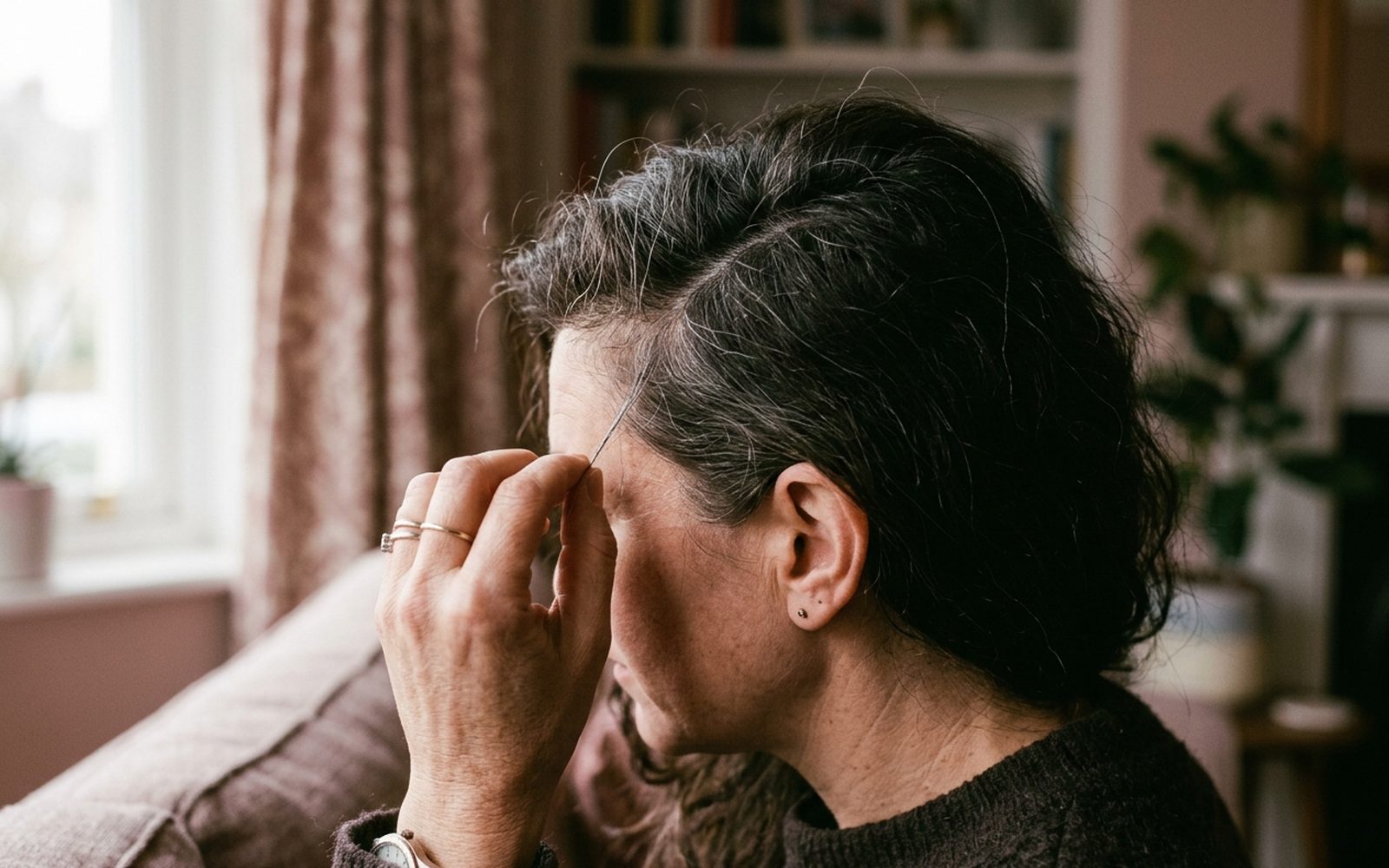
The greys and the thinning tend to arrive together, at the temples, somewhere between 36 and 44, and a lot of women experience them as one problem: hair that is not just less but worse. They are related, and it helps to understand how.
Why hair goes grey
Each follicle contains pigment cells that colour the hair as it is built. Those cells are replaced from a small reservoir of stem cells in the follicle, and the reservoir is finite. Every hair cycle uses some of it up. When it runs out, the follicle keeps producing hair, but without pigment: white. Grey is the mixture of pigmented and white hairs seen together. The age it happens is mostly genetic; the temples go first because those follicles cycle fastest.
Why it clusters after children
A follicle that is pushed through extra cycles — by a postnatal shed, a weaning shed, an illness, sustained stress — uses its pigment reservoir faster. Two babies in three years can mean several extra cycles at the temples, and the greys that would have arrived at 45 arrive at 39. Oxidative stress from lack of sleep and high cortisol also damages pigment cells directly. So the same events that leave some follicles quiet leave others pigment-free. It is the same tissue absorbing the same hits in different ways.
The thing to hold on to is that a grey hair is a working follicle. It is producing a full-thickness fibre. From a density point of view it is good news.
Not sure which one is you?
Take the two-minute hair quiz
Twelve quick questions. We tell you what we think is going on, what to do about it, and we say so if it is something we cannot help with.
Start the quiz →Why grey hair feels different
The pigment cells also make some of the oils and proteins that keep the fibre supple, and the follicle producing a white hair often produces less sebum. The result is a hair that is drier, coarser, wirier and more prone to standing up and refusing to lie with the rest. On a head that is also thinning, a few wiry whites at the parting are disproportionately visible, which is why they cause so much distress relative to their number.
Looking after grey and thinning hair together
Do not pluck. It does not make two grow back — that is a myth — but repeated plucking damages the follicle, and on a thinning temple you cannot spare one.
Moisture, not protein. Grey hair is usually dry rather than weak. A leave-in conditioner or a light oil on the lengths, and a hydrating mask weekly, softens the wiriness. Heavy protein treatments make it stiffer.
A purple or silver shampoo once a week if you are letting it grow in; it neutralises the yellowing that pollution and heat give white hair. Not more than weekly, or it dulls it.
Colour choices: if you are covering grey on thinning hair, a demi-permanent within two shades of your natural depth, applied to the roots only, covers scattered grey gently and does not lift. Highlights or a lighter overall shade blend grey rather than cover it and need less maintenance, and lighter hair at the temples makes thinning corners less visible. Permanent colour every four weeks on the whole head is the option to avoid. The colour article goes into this.
Heat with care. Grey hair yellows and gets brittle with high heat. Straighteners under 180°C, and a heat protectant, always.
Can grey be reversed?
Occasionally, temporarily, when the trigger was acute stress and the pigment cells were suppressed rather than lost. Mostly, no. Nothing sold as a “grey reversal” supplement does what it says. What can be changed is the fibre’s condition and the number of follicles producing a full hair around it, and the second of those is what most of this site is about.
Ready to read your own pattern?
Take the two-minute hair quiz
Twelve questions. We tell you what we think is going on for you, and we say so if it is something a GP should see first.
Start the quiz →