Evidence
Hair supplements: what the evidence says about each one

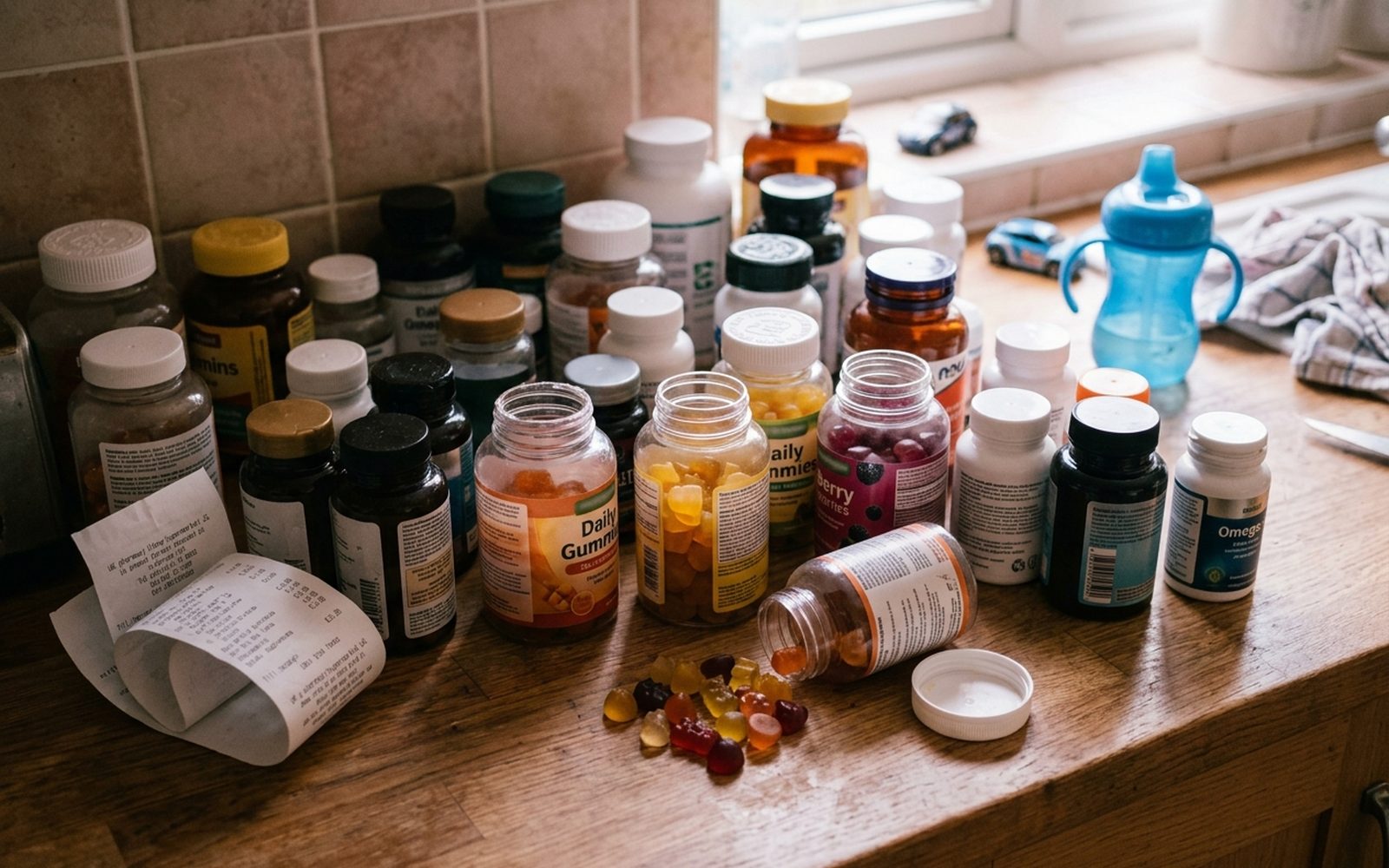
The UK spends an astonishing amount on hair supplements, and most of it is spent by women in the years after children, on the basis of an advert and a hope. Here is what the evidence supports, ingredient by ingredient, without either the hype or the sneer.
The ones with real evidence, if you are low
Iron. Low ferritin causes shedding and slows regrowth; correcting it fixes both. Evidence: good. Only if you are low, and then at a proper dose. How to.
Vitamin D. Deficiency lengthens follicle rest and is common in the UK. Evidence: moderate. Only if you are low, which most of us are in winter. More.
Zinc. Deficiency causes hair loss; supplementing when not deficient does nothing and at high doses lowers copper. Evidence: good for deficiency, none otherwise. Test before taking more than 15mg.
Not sure which one is you?
Take the two-minute hair quiz
Twelve quick questions. We tell you what we think is going on, what to do about it, and we say so if it is something we cannot help with.
Start the quiz →Vitamin B12. Deficiency causes diffuse thinning, mainly in vegans, vegetarians and women on long-term acid-reducing medication. Evidence: good for deficiency.
Protein. Not a supplement in the usual sense, but the one most mums are actually short of. A protein powder is a legitimate way to get it. Evidence: good.
The ones with some evidence in their own right
Marine collagen peptides. A handful of small trials show modest improvements in hair thickness and nail strength over six months. The mechanism is probably amino-acid supply. Evidence: weak but present. Harmless. Expensive for what it is.
Saw palmetto. A plant extract that mildly blocks DHT. Some small studies suggest a small effect on pattern hair loss; the quality is poor. Evidence: weak. Harmless in most; not for pregnancy or feeding.
Inositol for women with PCOS improves insulin resistance and can improve hair as a knock-on. Evidence: moderate for PCOS, none otherwise.
Omega-3. Modest evidence for reducing shedding and improving scalp condition. Cheap, generally good for you. Evidence: weak to moderate.
The ones with almost no evidence
Biotin. The headline ingredient in nearly every hair gummy. Biotin deficiency is very rare on a normal diet, and in women who are not deficient there is no evidence it does anything for hair. It also interferes with thyroid and other blood tests, so stop it a week before any bloods. Evidence: none unless deficient.
“Hair, skin and nails” blends. Typically biotin plus low doses of ten other things, none at a level that would correct a deficiency. Evidence: none. The cost is the main harm.
Keratin, silica, MSM, horsetail, bamboo, ashwagandha for hair. Theories, testimonials, no controlled evidence. Harmless, mostly.
The premium clinical-looking brands. Some publish their own trials, which are small, short, company-funded and rarely compared with a placebo of equivalent nutrition. The honest reading is: probably a little better than nothing in women who eat badly, because they contain nutrients; not the mechanism they describe.
The ones that can make it worse
Vitamin A above about 3,000 micrograms a day causes hair loss, and it accumulates. Some hair and skin supplements stack it with a multivitamin. Check the total. Selenium above 400 micrograms does the same. Iron when you are not low causes constipation and, over years, iron overload in susceptible women. Very high-dose biotin makes thyroid tests read falsely normal, so a thyroid problem gets missed.
The sensible position
Test ferritin, vitamin D, thyroid and, if you are plant-based, B12. Correct what is low at a real dose. Eat protein. Take a basic vitamin D through the winter. Everything else is optional and, for the money most women spend on gummies over a year, a proper follicle-level scalp treatment does more. This article explains why a supplement cannot reach the mechanism most mums’ thinning is driven by.
Ready to read your own pattern?
Take the two-minute hair quiz
Twelve questions. We tell you what we think is going on for you, and we say so if it is something a GP should see first.
Start the quiz →