Reading the signs
Breakage or shedding? The thirty-second test

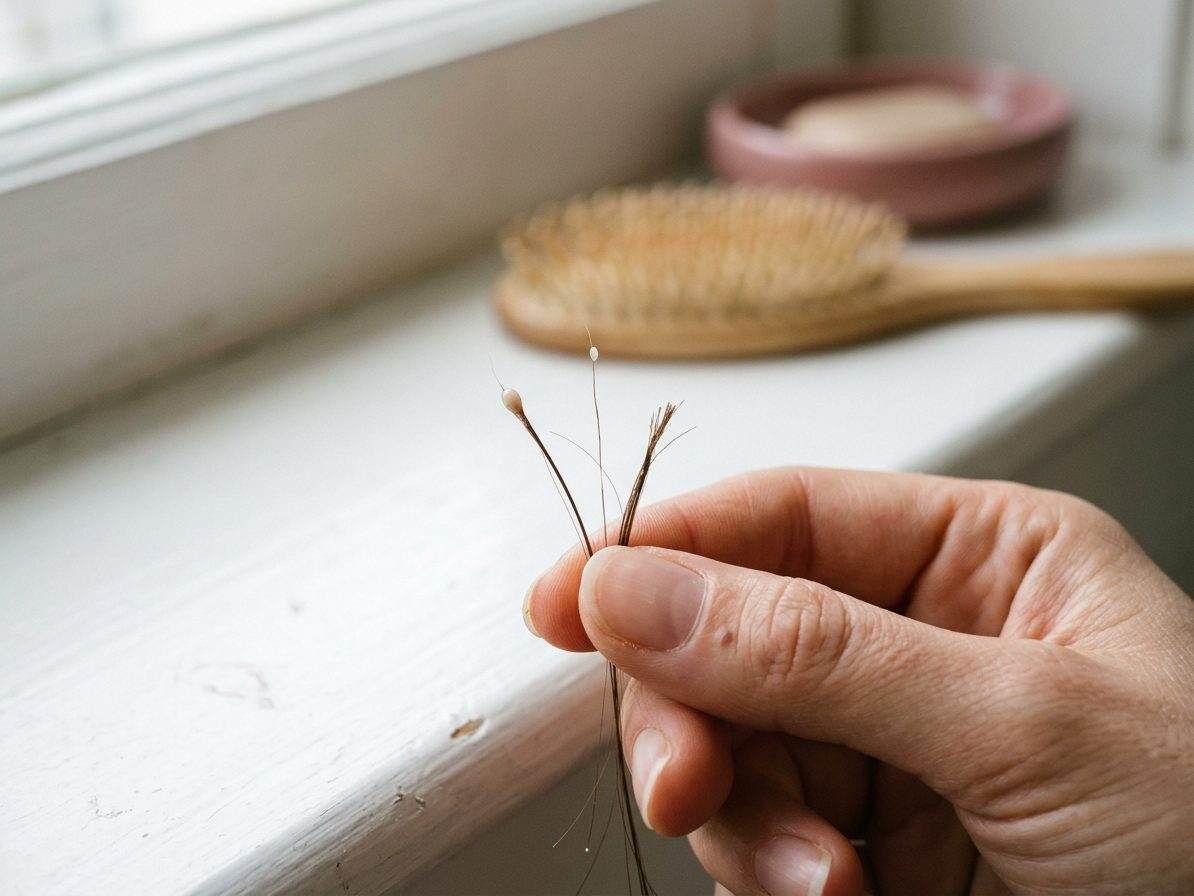
Pick up a few of the hairs from the brush or the plughole and look at the end that was attached to you. That is the whole test.
The root end
A hair that has shed has a tiny pale bulb at the root — a soft, slightly swollen tip you can feel with a fingernail. That hair finished its cycle and was released by the follicle. If most of what you are finding has a bulb, you are shedding, and the question is why the cycle has shortened.
A hair that has broken has no bulb. Both ends are cut, often one of them frayed or split, and the pieces are usually shorter than your full length. That hair snapped somewhere along the shaft. If most of what you are finding has no bulb, the follicle is fine and the fibre is not.
Why mums get both
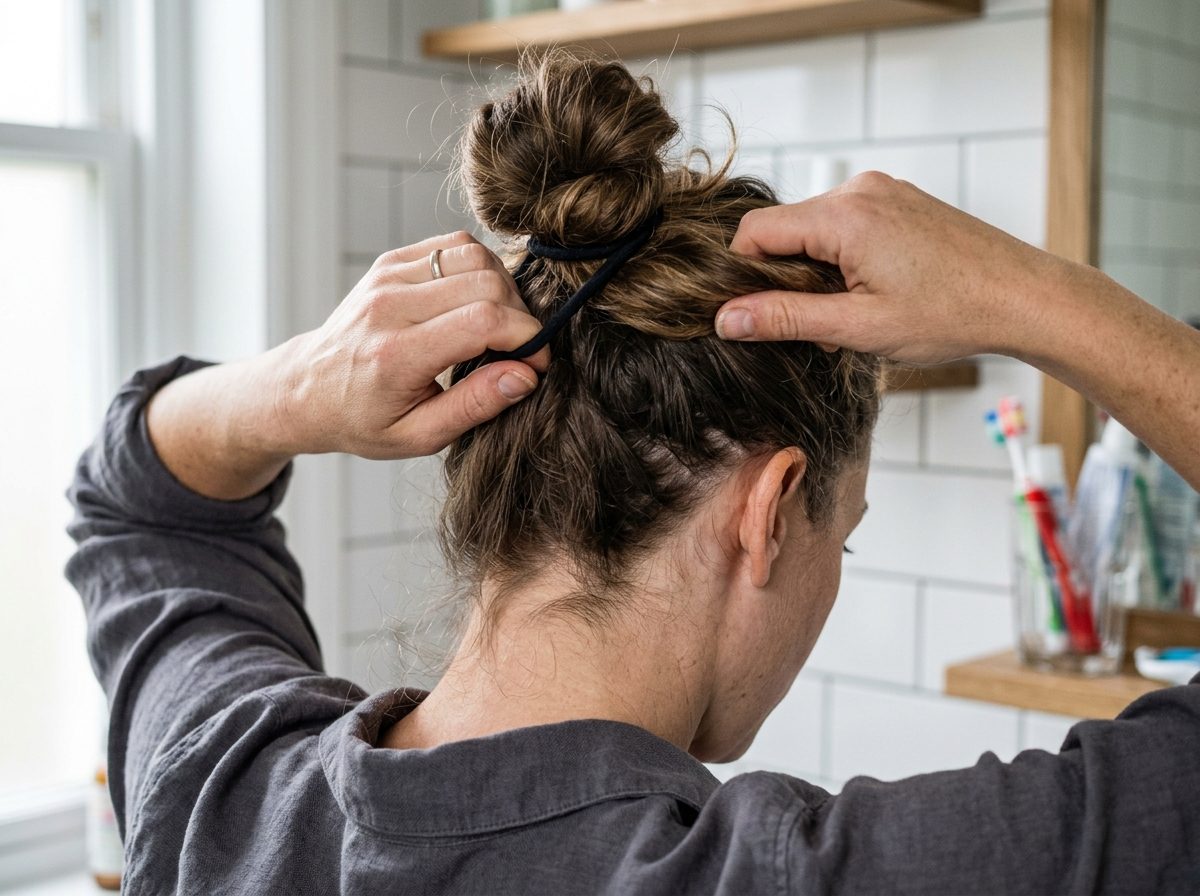
Breakage is common after children for unglamorous reasons: the same tight bun every day, hair tied up wet, no time for a heat protector, the ends never trimmed because appointments are the first thing to go. It shows as a short fuzzy layer at the crown and around the hairline, and a ponytail that looks thinner because the hairs are shorter, not fewer.
Not sure which one is you?
Take the two-minute hair quiz
Twelve quick questions. We tell you what we think is going on, what to do about it, and we say so if it is something we cannot help with.
Start the quiz →Shedding after children is hormonal and is covered across this site. The two can coexist, and often do — which is why so many women fix the breakage with a better routine, see the halo of short hairs settle, and still find the parting is wider.
What to do with the answer
- Mostly no bulb: looser styling, never tie it wet, a trim, heat protection. A protein treatment can help a damaged fibre; it will not change what grows.
- Mostly bulb, youngest under a year: almost certainly the postnatal cycle. Wait, check iron.
- Mostly bulb, youngest older, and the hairline or parting is thinner: the follicles are cycling short and some have gone quiet. That is the hormonal, follicle-level pattern, and the answer is at the scalp, not in the conditioner.
Ready to read your own pattern?
Take the two-minute hair quiz
Twelve questions. We tell you what we think is going on for you, and we say so if it is something a GP should see first.
Start the quiz →