Habits
Brushing and detangling fine hair without losing half of it

I get sent a lot of photographs of brushes. The question is always whether that much hair is normal. Usually it is. But watching how women brush — from the root down, fast, on wet hair, with the wrong tool — I can often see where a fifth of it came from, and that fifth is the fifth you can keep.
What is on the brush
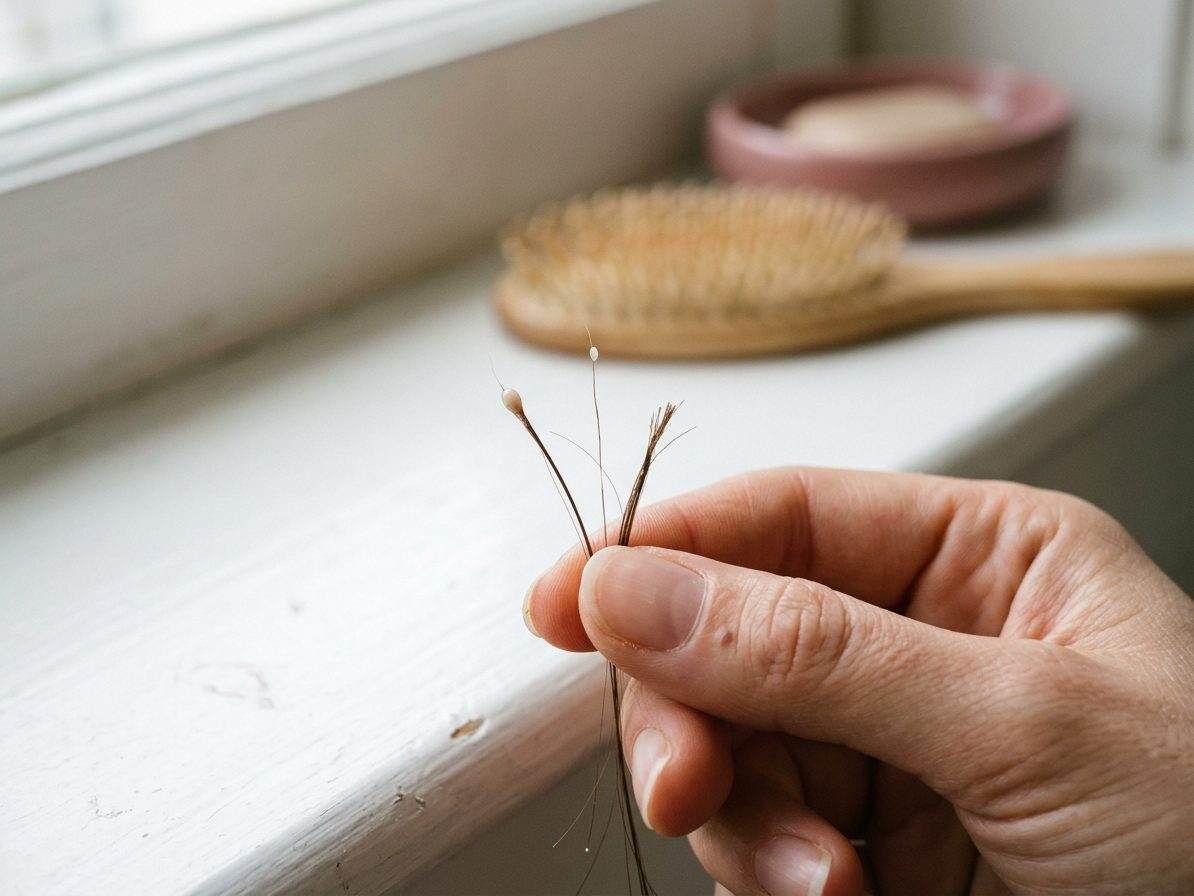
Most of the hairs in a brush are released hairs: full length, a small white bulb at one end, let go by the follicle at the end of its cycle. Brushing collected them; it did not cause them. Fifty to a hundred a day is normal. The rest are broken hairs: shorter, no bulb, a blunt or frayed end. Those are the ones technique produces, and on fine or thinning hair they matter, because fine hair breaks at a fraction of the force thick hair needs.
The rules
Ends first. Hold the section in one hand a few inches from the ends and brush out the last few inches until they are clear. Move the hand up and brush the next few inches. Only when the lengths are clear do you brush from the root. Brushing from the root into a tangle drags the whole length through the knot and snaps it.
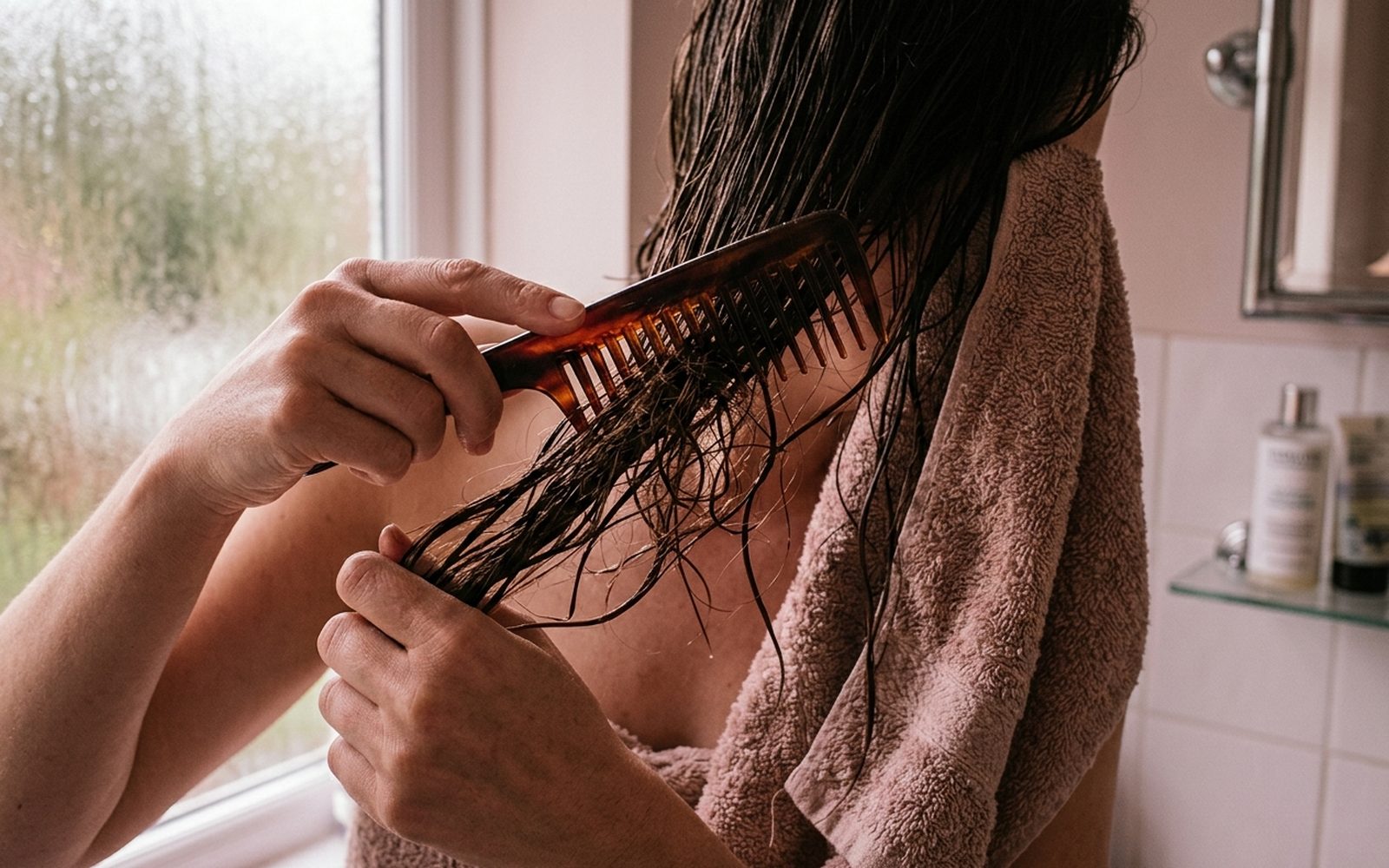
Not when soaking wet. Wet hair stretches up to a third of its length and breaks when it springs back. Blot with a towel, let it drip for a few minutes, then comb — with a wide-tooth comb or a brush designed for wet hair, never a bristle brush — and only from the ends up. Better still, comb conditioner through in the shower and rinse; that does the detangling with the slip still in.
Not sure which one is you?
Take the two-minute hair quiz
Twelve quick questions. We tell you what we think is going on, what to do about it, and we say so if it is something we cannot help with.
Start the quiz →Slowly. Speed is force. A brush that meets resistance should stop, not push through.
Not a hundred strokes. Once or twice a day, enough to distribute oil from the scalp and clear tangles. More is friction.
Clean the brush. Weekly. A brush full of shed hair, dry shampoo and oil catches more hair and puts residue back on the scalp.
The tools
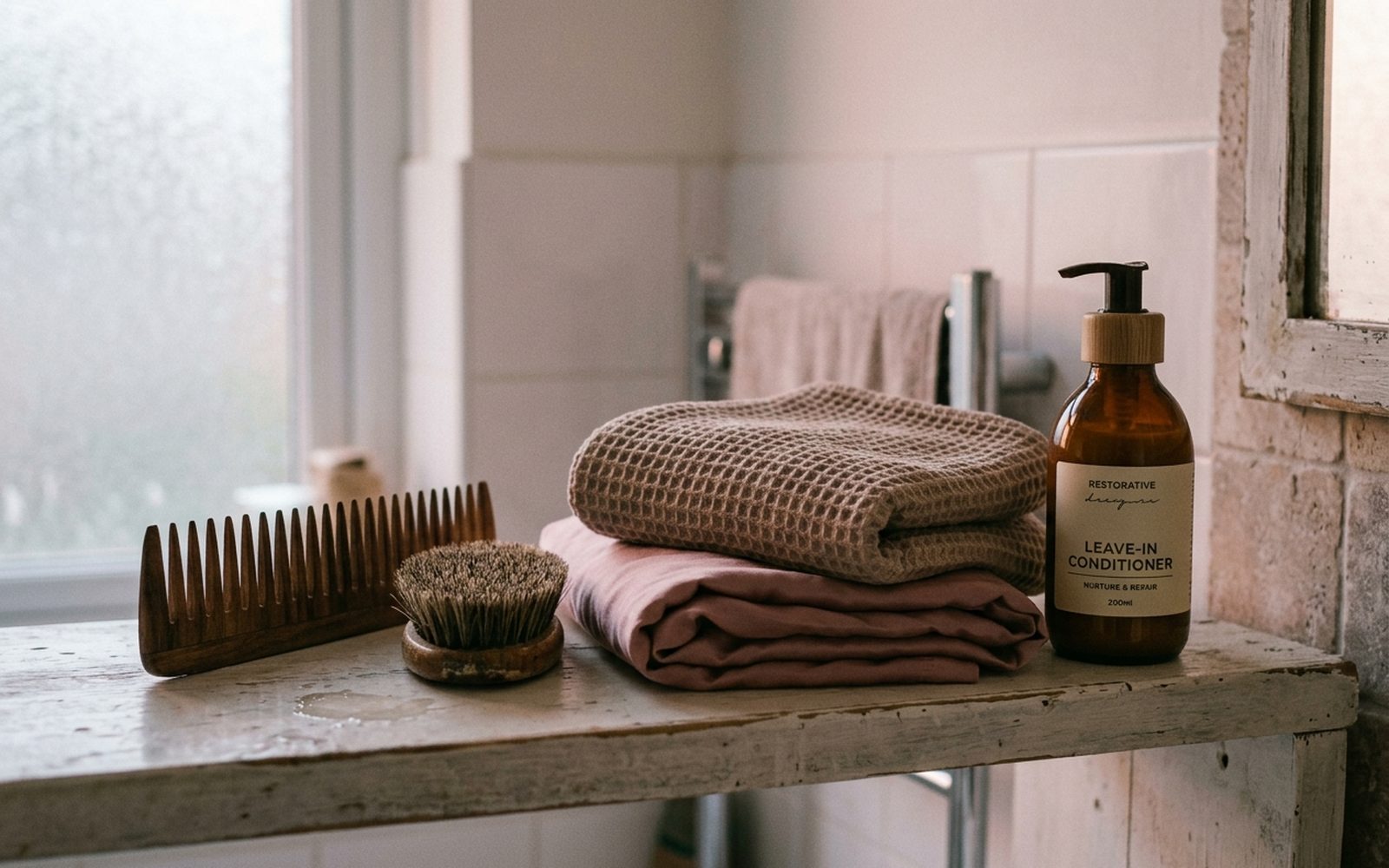
For wet hair: a wide-tooth comb, or a flexible-bristle detangling brush with widely spaced, bendy teeth. The bendy teeth give way instead of the hair.
For dry hair: a soft boar-bristle or mixed boar-and-nylon brush with a cushioned base. Boar bristles are gentle and distribute oil; the cushion absorbs pressure. Avoid tight, hard nylon bristles with balls on the ends that catch fine hair, and metal-bristle brushes altogether.
For styling: a large round brush used only on nearly-dry hair, with the dryer, never dragged.
The habits around brushing
Sleep on silk or with hair in a loose plait so there are fewer tangles to fight in the morning. Take the bobble out gently — unwind it, do not pull it — and choose fabric ties or coils that do not grip. Detangle before washing, not after; wet tangles are the worst tangles. And do not brush the scalp hard for “stimulation”; fingertip massage does that job without scratching the skin around the follicle.
Ready to read your own pattern?
Take the two-minute hair quiz
Twelve questions. We tell you what we think is going on for you, and we say so if it is something a GP should see first.
Start the quiz →