Hormones
Hair after fifty: what changes when the hormones stop changing
Most of this site is written for the decade between the last baby and the last period, because that is where the confusion lives. But a good number of the women who write to us are past it, and the hair after fifty has its own logic.
What has changed
Oestrogen is now steadily low rather than swinging, and the androgens, which fall more slowly, are relatively more influential than they have ever been. The follicles at the temples, parting and crown that oestrogen used to shield are exposed for good. The growing phase shortens and the resting phase lengthens for the whole scalp, so the hair grows slower and does not get as long. Sebum production drops, so hair and scalp are drier. Pigment cells run out, so more of it is white, and white hair is coarser. The skin of the scalp thins and its blood supply reduces a little each decade. None of this is dramatic year to year; all of it adds up.
What it looks like
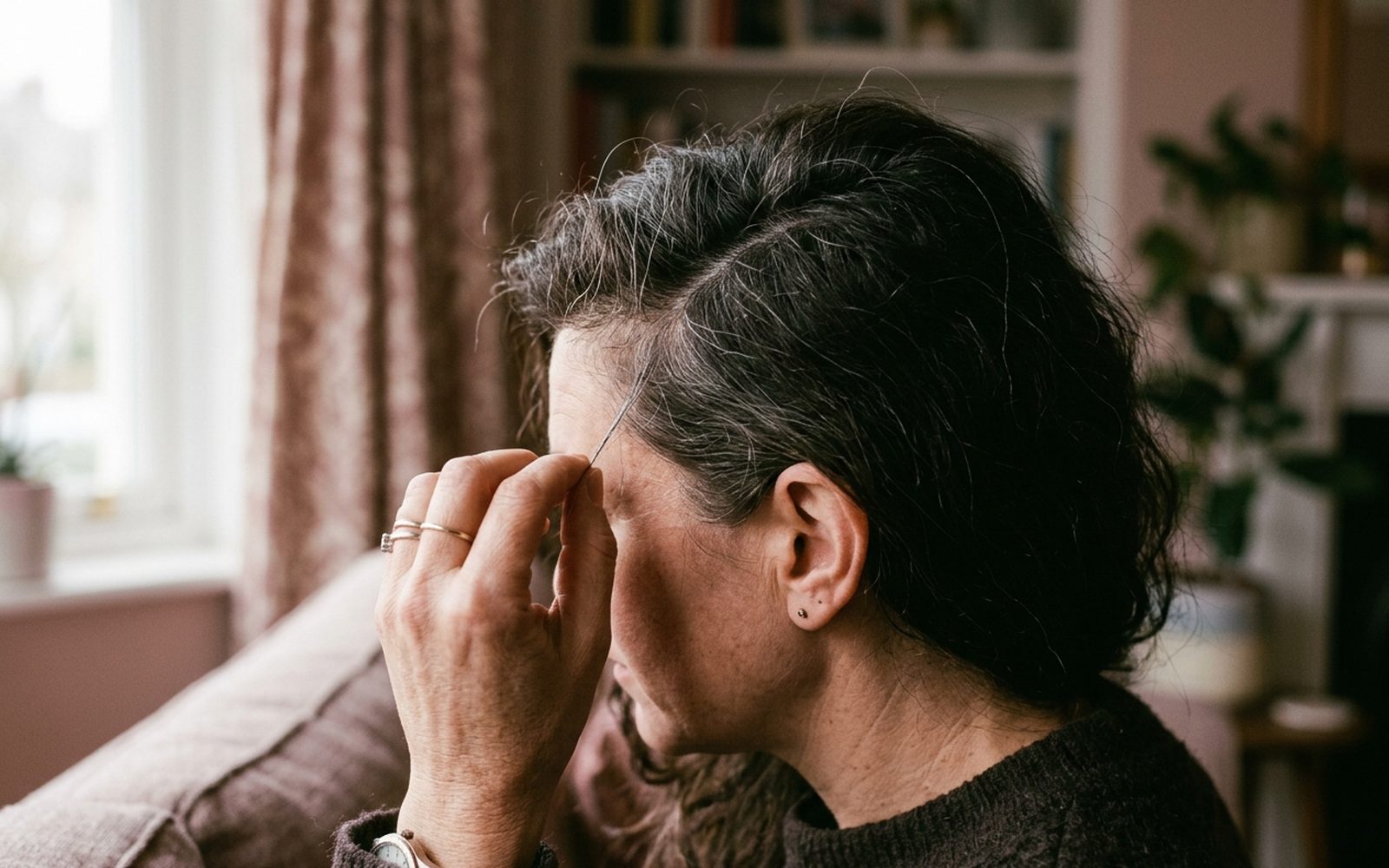
A wider parting that is now stable rather than widening fast. A ponytail that lost circumference through the forties and has now plateaued. Hair that will not grow past the shoulders where it once reached the waist. Drier, frizzier, harder to style. Sometimes a distinct thinning at the crown that was not there at 45. And, for women who did not get it earlier, the first real recession at the corners.
What still works
The follicle-level approach still works, and in some ways more predictably, because the hormonal weather has stopped changing and the follicles respond to a consistent signal. Regrowth is slower than at 40 — allow four to six months before judging rather than three — but follicles that are miniaturised rather than gone will still respond, and most are.
Not sure which one is you?
Take the two-minute hair quiz
Twelve quick questions. We tell you what we think is going on, what to do about it, and we say so if it is something we cannot help with.
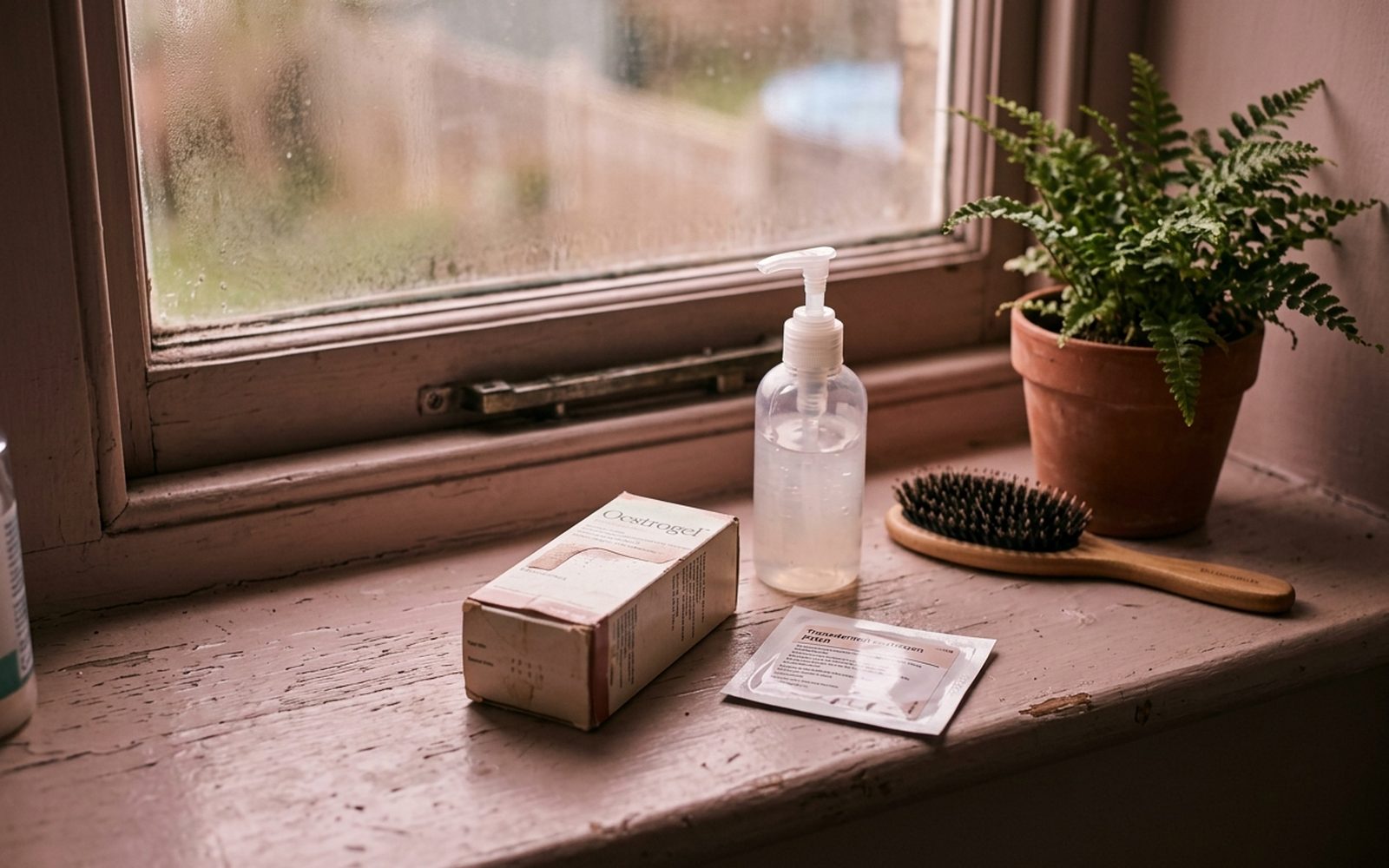
Start the quiz →HRT, if you are on it or considering it, reduces shedding and helps some women with density; the progestogen choice matters. More here.
Anti-androgens (spironolactone) are more freely prescribed after menopause because pregnancy is no longer a concern, and this is the age at which they have their best evidence. Worth raising with a GP or dermatologist for a crown or parting that is still progressing.
Iron matters less once periods have stopped, but ferritin can still be low from decades of them, and thyroid problems become more common with age. Check both.
Moisture matters more. A drier scalp and a drier fibre need lighter, less frequent washing, a leave-in conditioner or oil on the lengths, and less heat. The grey hair article covers the texture.
The cut matters most of all at this stage. Shorter, blunter, with a root-lifting blow-dry, does more for a post-menopausal head of hair than any product. The haircut article.
What to be alert to
Two conditions become more common after fifty and need a dermatologist rather than a shelf: frontal fibrosing alopecia, where the hairline moves back as an even band and the eyebrows go; and lichen planopilaris, where the scalp is itchy, tender and red around follicles and the thinning scars. Both are treatable if caught early and irreversible if not.
Ready to read your own pattern?
Take the two-minute hair quiz
Twelve questions. We tell you what we think is going on for you, and we say so if it is something a GP should see first.
Start the quiz →