Reading the signs
Hair loss three months after the flu, Covid or a bad winter bug
Since 2020 this has become one of the most common things I see: a mum who was properly ill in the winter, recovered, and then three months later is losing hair at a rate that frightens her. She has usually forgotten about the illness by then. The follicle has not.
Why illness makes hair fall out
A high fever, a significant infection, a hospital admission or a period of not eating pushes the body into conservation mode, and hair growth is one of the first things it pauses. A large cohort of follicles switches from growing to resting all at once. Resting follicles hold their hair for about two to three months and then release it — which is why the shed arrives on a delay, long after you felt better. It is telogen effluvium, the same mechanism as the postnatal shed, and Covid in particular has proved a potent trigger, with hair loss reported in a substantial minority of people after even moderate infection.
The timeline
Weeks 0–2: the illness. Weeks 8–14: shedding begins, often suddenly; the plughole, the brush, the pillow. Weeks 14–24: peak shedding, then a slow decline. Month 6 onwards: shedding back to normal, and a band of short regrowth visible at the hairline and parting. Month 9–12: density recovered in most women. If the shed follows this shape it needs nothing except patience and gentleness.
How to tell it from something else
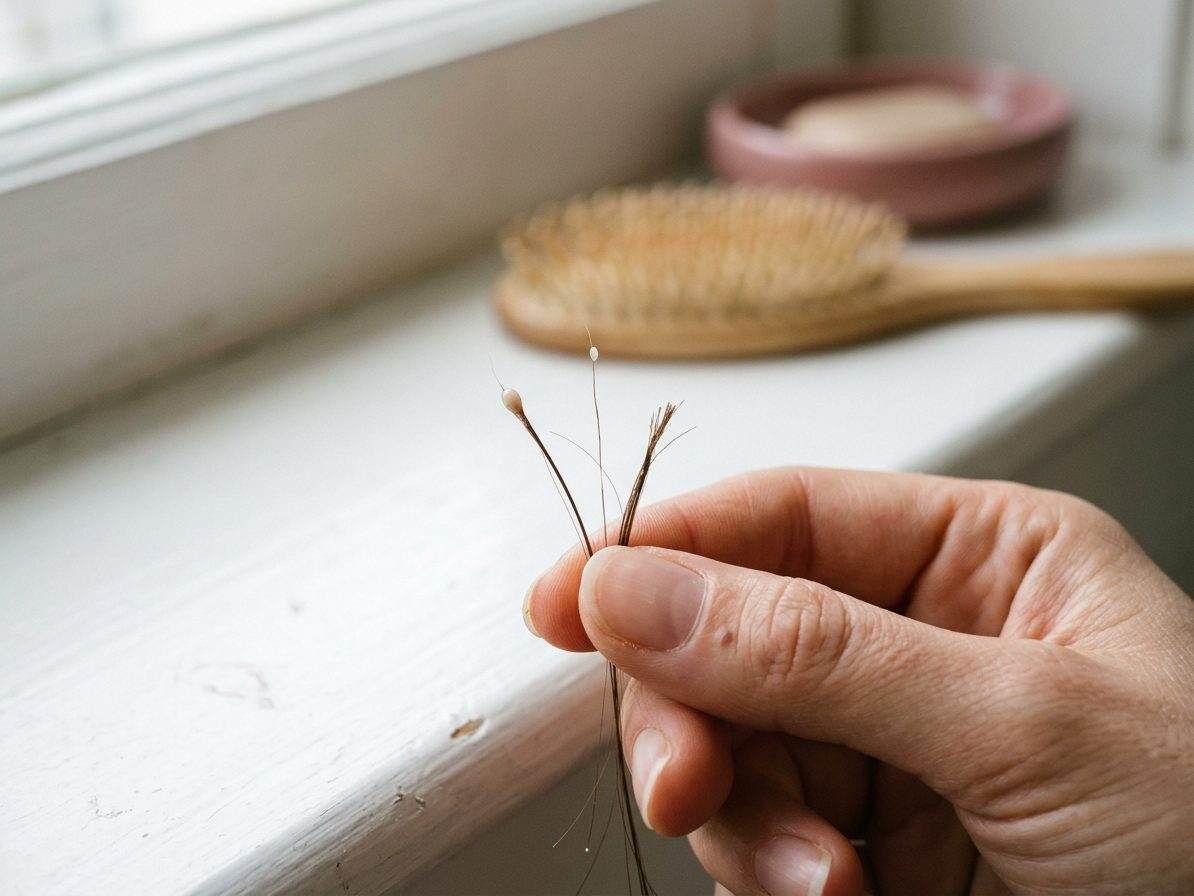
An illness shed is diffuse — everywhere, rather than a pattern at the temples or parting — and the hairs that come out are full length with a small white bulb at the root. The scalp is normal. It has a clear start and, by six months, a clear easing. If the shedding is still heavy at eight or nine months, or if what you are left with is a pattern rather than a general thinning, one of three things is going on: the trigger has not gone (ongoing fatigue, poor eating, disrupted sleep after the illness); the illness dropped ferritin or knocked the thyroid, both of which happen; or the shed has revealed pattern thinning that was already there and was hidden by the hair you had.
Not sure which one is you?
Take the two-minute hair quiz
Twelve quick questions. We tell you what we think is going on, what to do about it, and we say so if it is something we cannot help with.
Start the quiz →What to do
Eat. Appetite goes with illness and takes weeks to return; the follicles restart on protein and iron, and a mum recovering on toast restarts slowly.
Check ferritin, thyroid and vitamin D if the shed is still going at six months. A viral illness can trigger a thyroiditis, and a fortnight of not eating on top of two pregnancies can take ferritin under the line. What to ask for.
Be gentle. No tight styles, no lifting colour, no daily heat, while the shed runs. What you keep now is what carries you through.
Do not start minoxidil for a shed. It adds a drug and a rebound to a process that resolves on its own.
The part that is postnatal
If the illness landed inside the first year after a baby, the two sheds combine, and the combined version is longer and larger. Everything above still applies. What to watch is the temples and parting at the end of it: if they are recovering, the shed is finished; if they are not, this article is where to go.
Ready to read your own pattern?
Take the two-minute hair quiz
Twelve questions. We tell you what we think is going on for you, and we say so if it is something a GP should see first.
Start the quiz →