Habits
The hair you pull without noticing: twisting, twiddling and trichotillomania in mums

I want to write about this carefully, because it is common, it is almost never discussed, and the women who do it are usually mortified when they realise. It is not a character flaw. It is a nervous-system habit that starts under strain, and the postnatal years are exactly the strain that starts it.
The spectrum
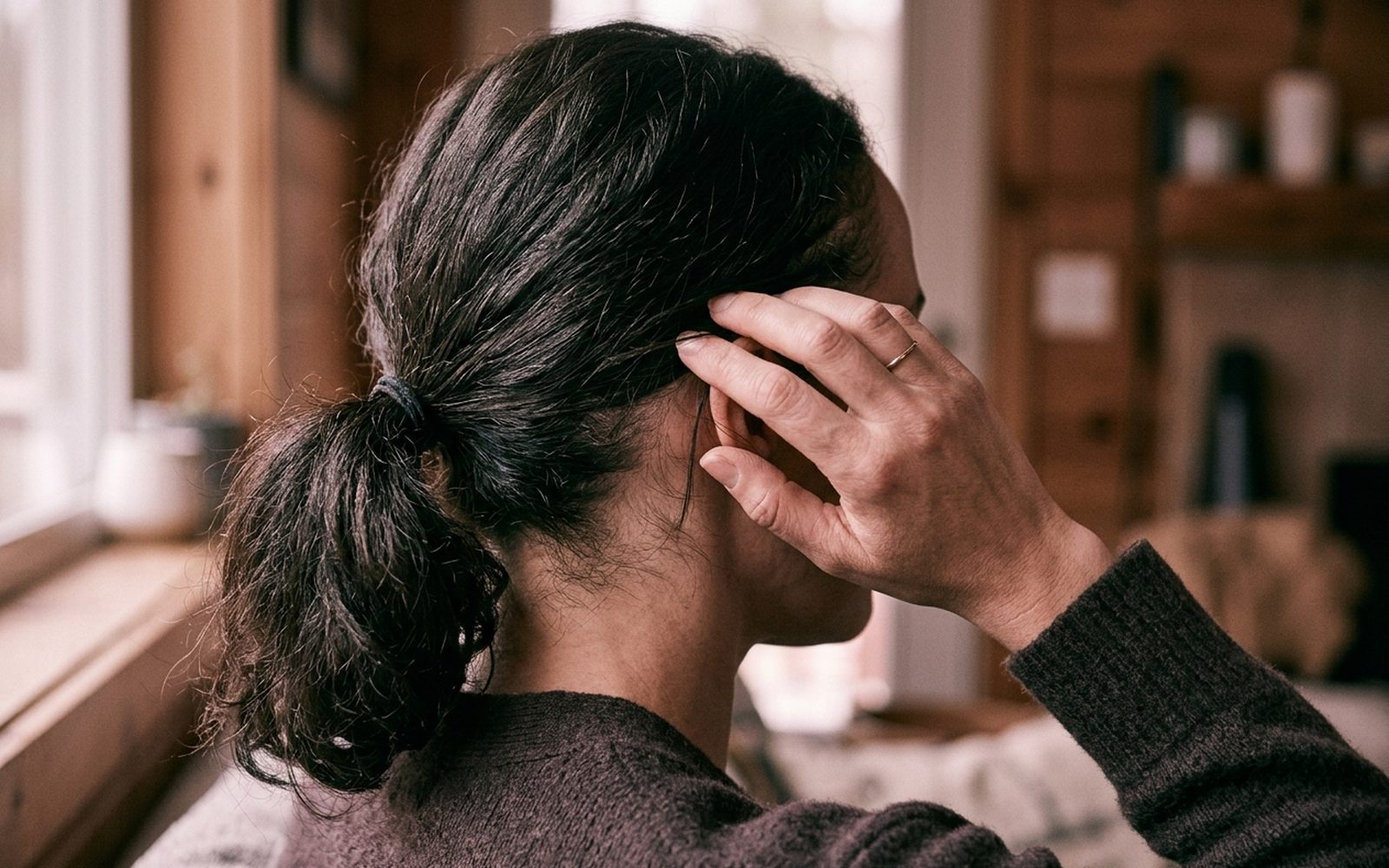
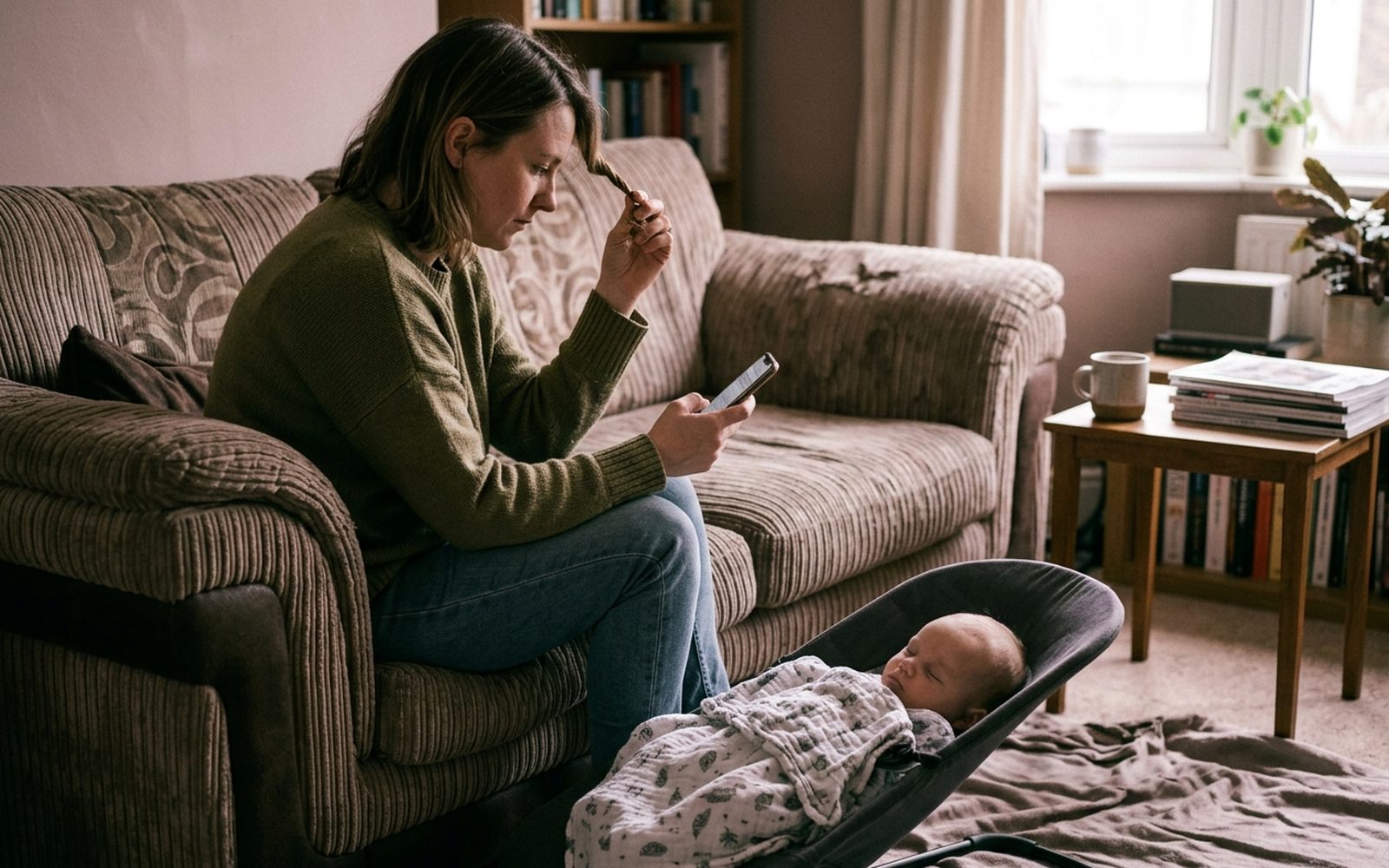
At one end is twirling: winding a section of hair round a finger while reading, feeding, driving or thinking. Most people do some of this. Done for hours a day on the same section, it twists and weakens the hairs until they snap, and produces a patch of short broken hair, usually at one temple or behind one ear.
In the middle is pulling out individual hairs — searching for a coarse one, a kinked one, a grey one, a “wrong” one — and removing it, then another. It gives a small relief each time, and it is easy to do a hundred times without counting.
At the other end is trichotillomania: a recognised condition in which pulling is compulsive, relieves tension, and produces visible loss that the person tries to hide. It affects around one to two in a hundred people, mostly women, and often starts or returns in periods of stress.
Not sure which one is you?
Take the two-minute hair quiz
Twelve quick questions. We tell you what we think is going on, what to do about it, and we say so if it is something we cannot help with.
Start the quiz →The dividing lines are blurred and it does not much matter where on the spectrum you are. What matters is whether it is producing a patch, and whether you would like to stop.
Why it starts after children
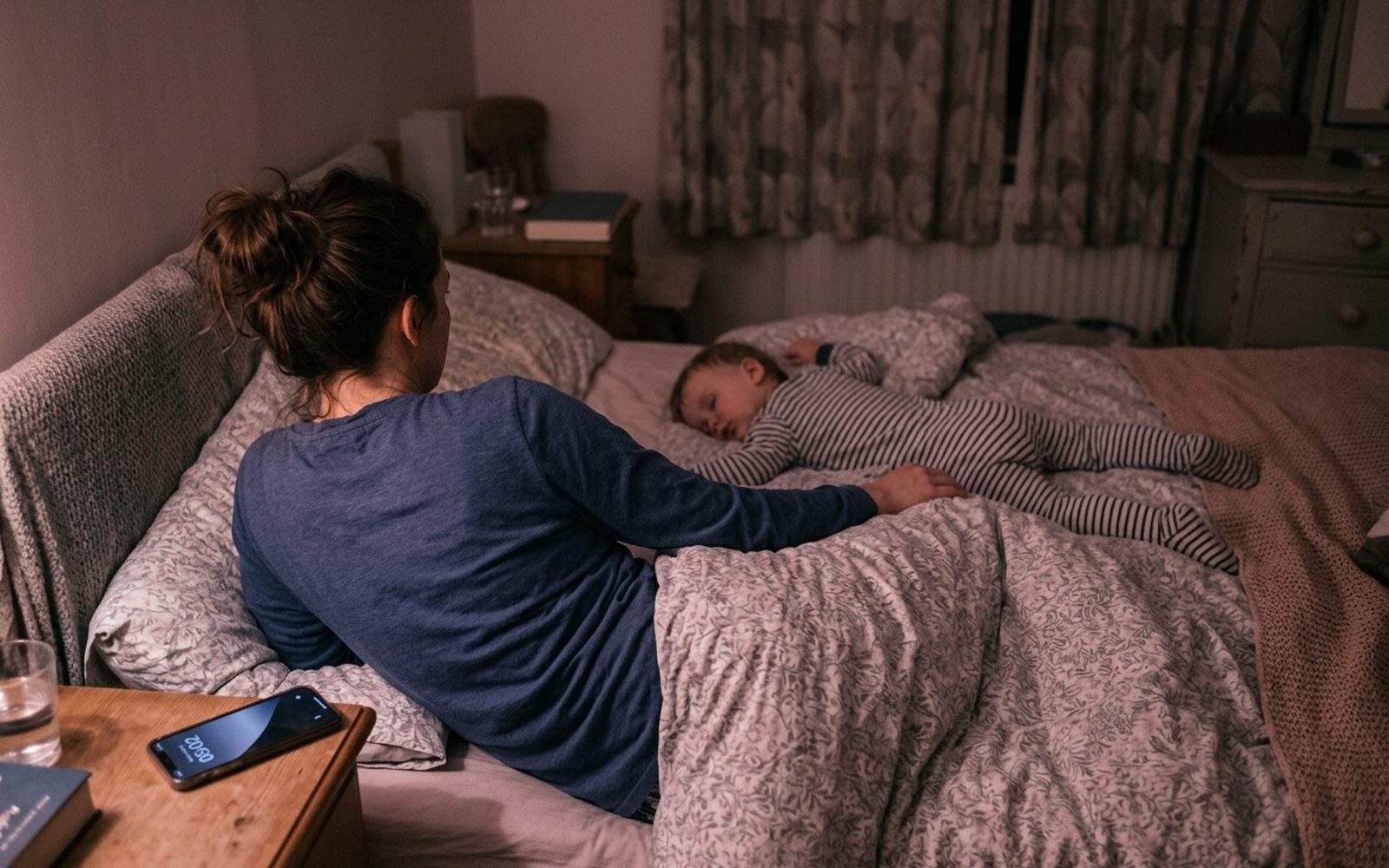
Because the hands are idle and the mind is not. Long feeds, long settles, long nights awake, long hours of scrolling with one hand while the other is free. Anxiety, sleep loss and the sensory overload of small children all raise the baseline tension that hair-touching relieves. And the hair itself is changing — the postnatal regrowth halo is full of short, coarse, kinked new hairs that feel wrong and invite removal.
How to tell if it is you
A patch of short hairs of varying lengths, with blunt or frayed ends, on one side, in a place your hand naturally rests. Hairs on the sofa arm, the pillow, the car seat, in the places you sit. A partner who has seen you do it. A feeling of relief when you do, and of not quite being able to stop once you start. If two of those fit, it is at least worth watching for a week.
What helps
Awareness first. Most of it is unconscious. For a week, every time you notice, write a tick. The number is usually a surprise and the noticing alone reduces it.
Make it harder. Hair tied back in a low plait so there is nothing to catch. A silk scrunchie on the wrist to fiddle with instead. Gloves or a fidget for the feeds and the scrolling. A hat in bed for a while if the pulling is nocturnal.
Change the trigger situations. If it is the phone, put the phone in the other hand. If it is feeding, hold something else. If it is lying awake, get up.
Treat the tension. If the pulling is relief from anxiety, the anxiety is the thing. A GP can help, and it does not have to become a long conversation.
Habit reversal training is a short, specific form of therapy for hair-pulling with good evidence, available through NHS talking therapies in most areas by self-referral and privately. It works. It is the treatment for trichotillomania, and it is not a big deal to ask for.
What happens to the hair
Pulled hair grows back, usually within a few months of stopping, unless it has gone on for many years in the same place, in which case some follicles may have been damaged. The regrowth is short, coarse and tempting; protect it the way the regrowth article describes, and expect it to take a year to blend.
Ready to read your own pattern?
Take the two-minute hair quiz
Twelve questions. We tell you what we think is going on for you, and we say so if it is something a GP should see first.
Start the quiz →