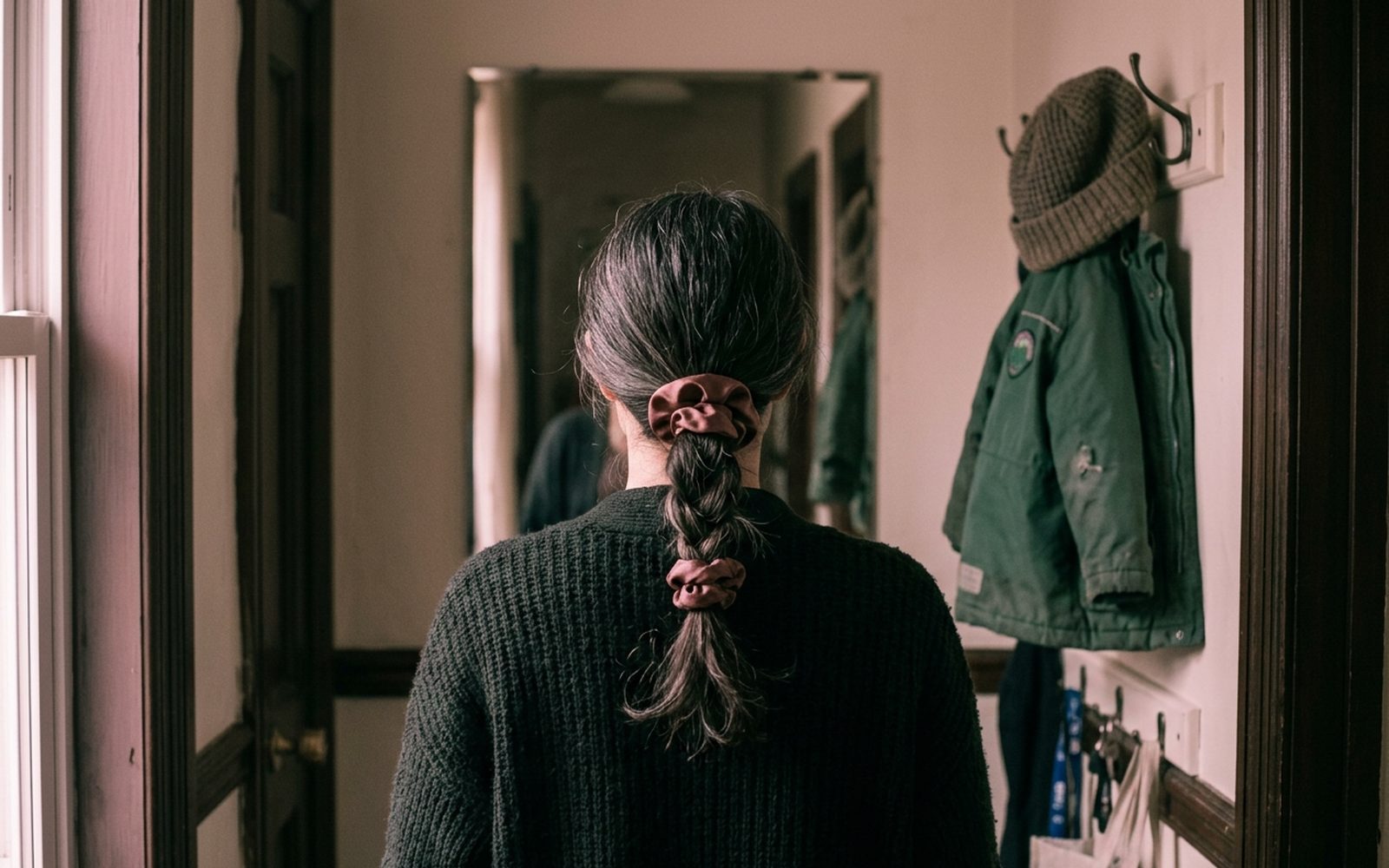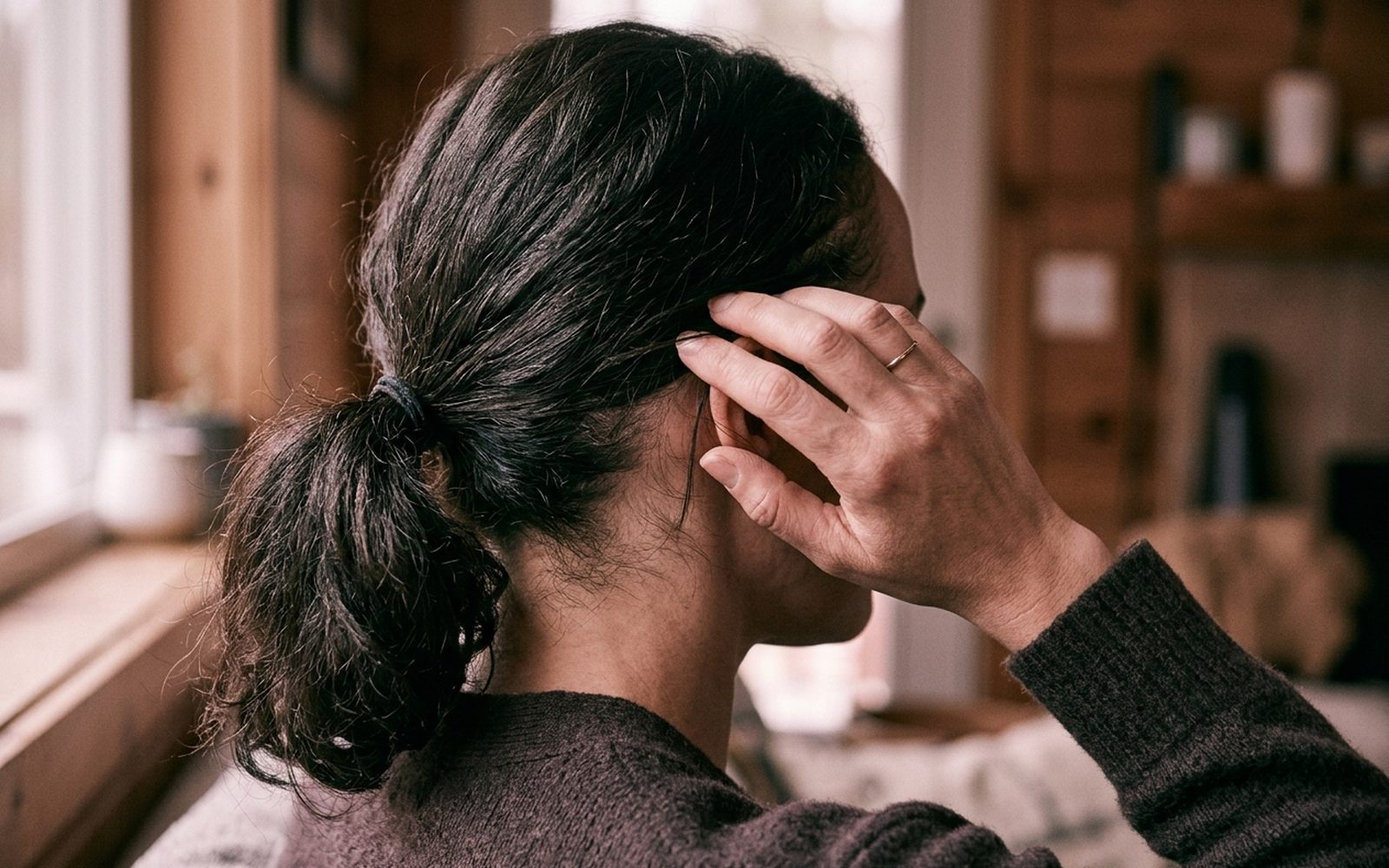
Reading the signs
Why one side is thinner than the other

The follicles on the two sides of your head have the same genes and the same hormones. When one side is clearly worse than the other, the cause is nearly always on the outside, and it is worth finding, because outside causes stop when you stop them.
The usual suspects
The parting. If you have parted your hair on the same side for twenty years, the follicles along that line have had twenty years of overhead light, sun, and the pull of the hair falling away from them. A parting that has been in one place for decades often shows a wider strip of scalp on that side and a thinner temple on the side the hair is swept away from. Moving it an inch, or to the other side, gives those follicles a rest and disguises the line overnight.
The side you sleep on. Hair that is pressed against a pillow all night on the same side, particularly a cotton pillow with a tight style, breaks more on that side. Silk or satin helps; loosening the style helps more.
The side you carry a child on. A toddler on the left hip grabs and pulls the left side of the head for two years. Small children also rub, twist and chew hair on whichever side they are held. It adds up.
Not sure which one is you?
Take the two-minute hair quiz
Twelve quick questions. We tell you what we think is going on, what to do about it, and we say so if it is something we cannot help with.
Start the quiz →The side you twiddle. A great many women twist or pull a section of hair while reading, working or on the phone, and do not know they do it. It is almost always the same section, usually near the temple, and it produces a patch of short broken hairs and, over years, a genuinely thinner area. Ask someone who lives with you. If it is more than a habit — if you cannot stop, or it is a relief to do it — it has a name (trichotillomania), it is common under stress, and it is treatable; say it to your GP without embarrassment.
The side the bobble sits, the clip goes, the phone is held, the bag strap crosses. Anything that is always on one side.
The side that faces the sun in the car. Driver’s side is the right in the UK; a daily commute with the sun on the right temple over years ages the skin and the follicles on that side.
When asymmetry is not a habit
A patch on one side that is round, smooth and appeared over weeks is alopecia areata. A one-sided area that is sore, scaly, red or scarred is a scalp condition. A one-sided thinning that is new, rapid and has no habit to explain it is worth a GP look. But most one-sided thinning in mums is a habit, and the test is simple: change the habit for three months and see whether that side catches up.
What it tells you about the rest
If the two sides are the same — both temples receding equally, the parting wide along its whole length, the crown thinning in a symmetrical whorl — then the cause is inside, and it is hormonal. That is not a worse finding; it is just a different one, with a different answer, which the hairline article sets out. Most mums have a bit of both: a symmetrical hormonal process with one side made worse by a habit. Fix the habit, and treat the process.
Ready to read your own pattern?
Take the two-minute hair quiz
Twelve questions. We tell you what we think is going on for you, and we say so if it is something a GP should see first.
Start the quiz →