Habits
The styles that protect a thinning hairline (and still survive a toddler)

The advice to “avoid tight hairstyles” is easy to give and impossible to follow with small children, because hair down is hair pulled, chewed and covered in yoghurt. The realistic goal is not to stop putting it up. It is to stop the way it goes up from doing damage.
The two rules
Rule one: tension at the hairline is the enemy, not the style. Traction damage happens where the hair is pulled tight against its root, and the hairline and temples have the finest, most fragile follicles. Any style is fine if you can slide a finger under it at the hairline without resistance. Any style is a problem if the skin at the temples looks pulled or you feel it when you smile.
Rule two: move it. The same ponytail in the same place every day for years puts the same follicles under the same strain. A high pony one day, a low one the next, a plait on the third, and the load is spread. This one change does more than any product.
Six styles that hold
The low, loose ponytail with a fabric tie. Gather at the nape, not the crown; the lower the pony, the less pull at the front. Use a silk or satin scrunchie or a coiled plastic tie rather than an elastic bobble, and do not wrap it more times than it needs.
Not sure which one is you?
Take the two-minute hair quiz
Twelve quick questions. We tell you what we think is going on, what to do about it, and we say so if it is something we cannot help with.
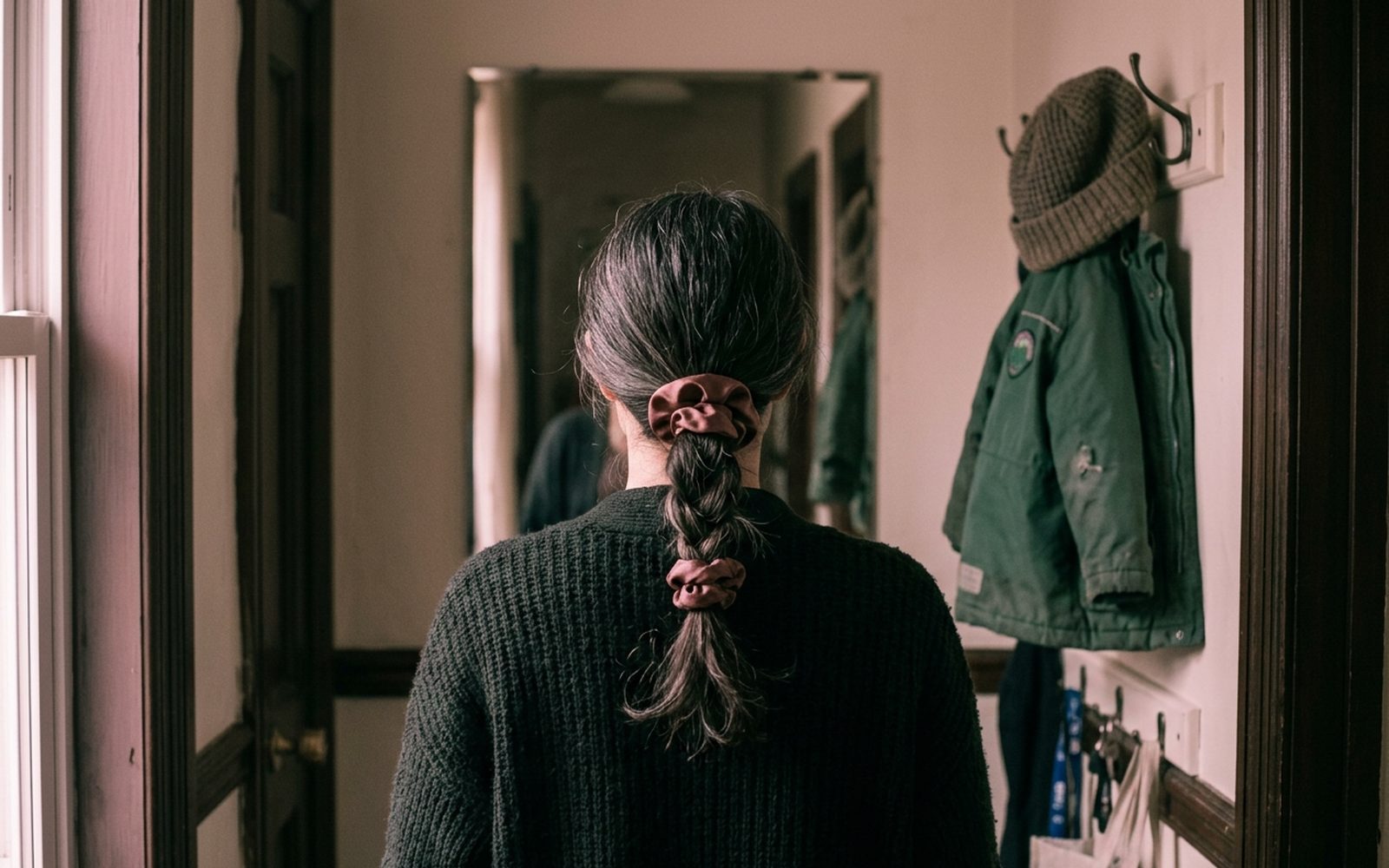
Start the quiz →The loose plait. A single plait starting at the nape holds all day, tolerates being grabbed, and distributes tension along its length rather than at the root. Do not start it tight at the top; leave the first few inches soft.
The claw clip twist. Twist the hair loosely up the back of the head and hold with a large claw clip. There is no tension at the hairline at all and it takes four seconds. Choose a clip with rounded teeth and change where you place it.
The half-up. Only the top section is tied back, with a small clip or soft tie at the crown. It keeps hair out of the face without loading the temples, and the loose lower half gives volume.
The soft headband or wide fabric band. Pushes the hair back without pulling it, and covers the corners of the hairline on days you would rather not see them. Avoid the hard plastic ones with teeth; they sit exactly where the fine hairs are.
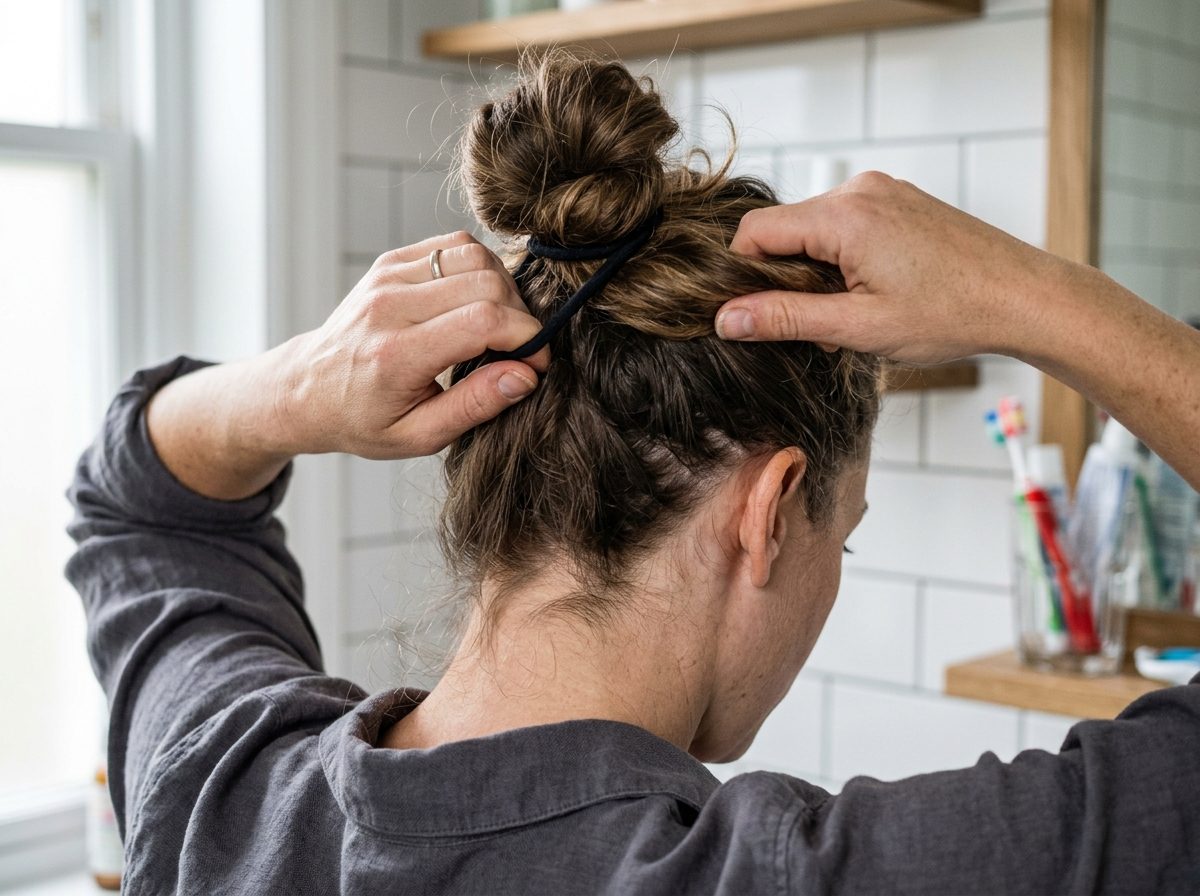
The loose low bun with a bun ring or a spin pin. A bun is only a problem when it is twisted tight and secured with a bobble at the base. Roll it loosely, secure with two spin pins or a couple of soft grips, and it is one of the gentlest styles there is.
The habits around the style
Take it down as soon as you are home; hair does not need to be up on the sofa. Never sleep in a ponytail or a tight bun; a loose plait or a silk pillowcase is enough. Do not put wet hair up tight; wet hair stretches further and snaps more easily. And keep tie lines from sitting at the same point by moving the bobble an inch up or down each day.
What protecting the hairline cannot do
Removing tension stops breakage and gives traction-stressed follicles a chance to recover, which takes about three months. It does not restart follicles that have gone quiet after children or with hormonal decline; those are not resting because they are being pulled, and they will not restart because the pulling stops. If the corners are still receding on a hairline that has been treated kindly for three months, the cause is at the follicle, and the quiz is the quickest way to work out which one.
Ready to read your own pattern?
Take the two-minute hair quiz
Twelve questions. We tell you what we think is going on for you, and we say so if it is something a GP should see first.
Start the quiz →