The GP appointment
The itchy, flaky scalp: a plain guide to what it is and what to do
An itchy scalp is not just annoying. A scalp that is inflamed is a scalp where follicles struggle to grow, and I see a great deal of thinning that is being quietly held back by a skin problem nobody has treated. Here is how to work out what yours is.
First, the one that is not a skin condition
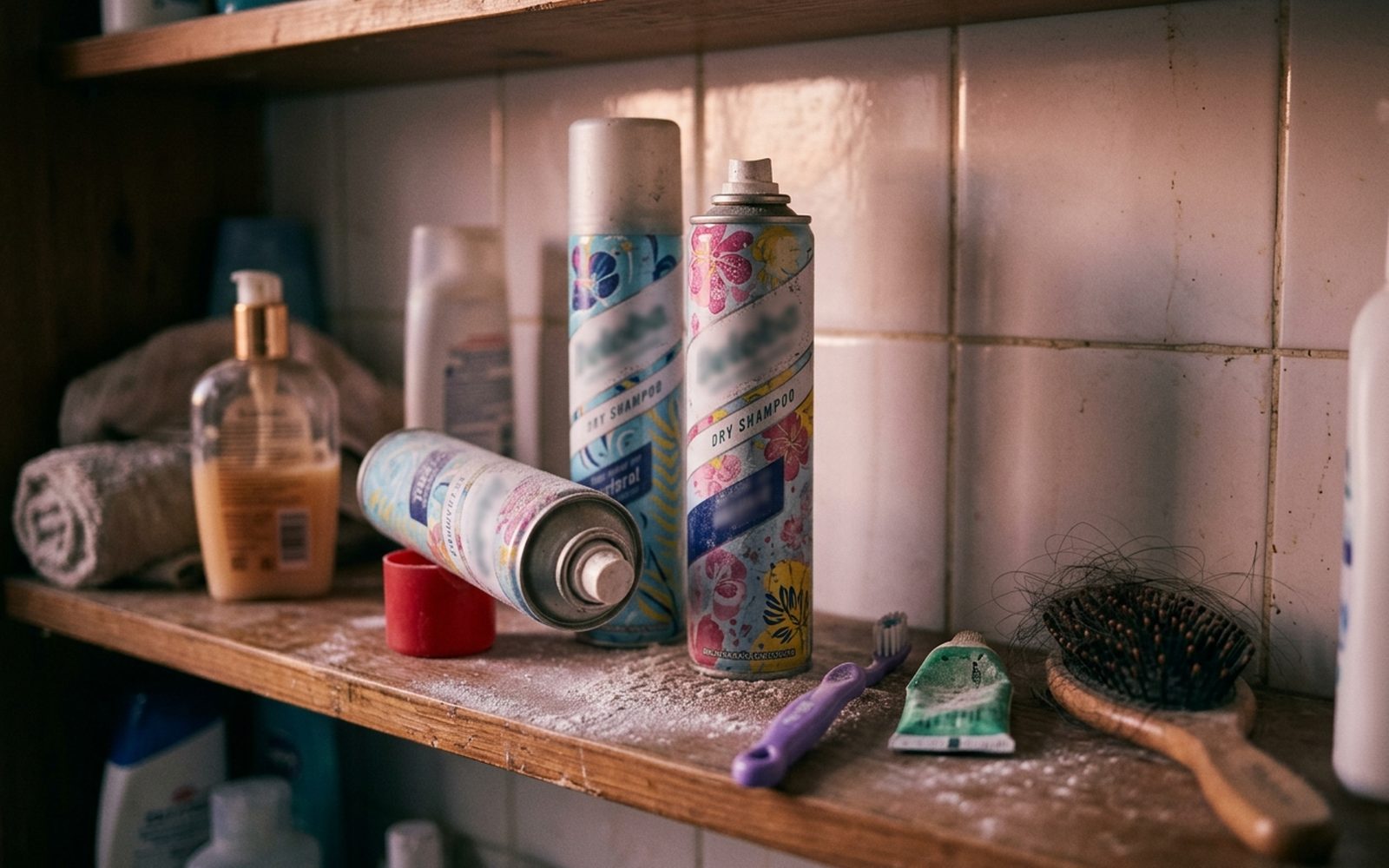
Product build-up. Dry shampoo, styling products, conditioner applied to the roots, and the mineral film from hard water all sit on the scalp and can produce itch and a fine, greyish flake that looks like dandruff but is really just residue. It is the first thing to rule out because the fix is trivial: a clarifying or chelating shampoo, worked into the scalp with the fingertips for a full minute, twice in a row, once a week for three weeks. If the itch and flakes go, that was it.
Dandruff and seborrhoeic dermatitis
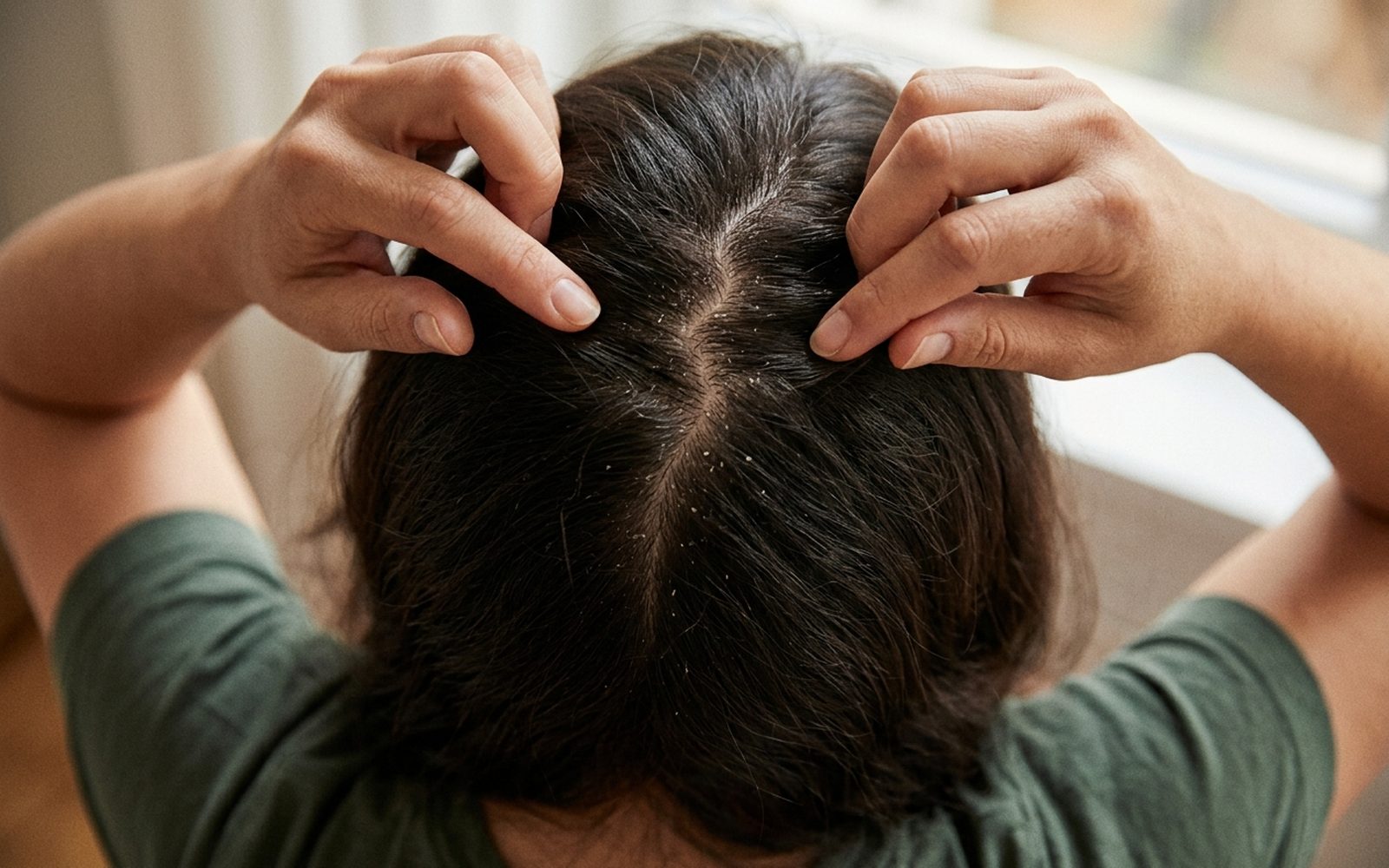
These are the same thing at different intensities. A yeast that lives on everyone’s scalp, Malassezia, feeds on scalp oil; in some people the skin overreacts to it, becomes inflamed, and sheds in flakes. Mild, that is dandruff: white or yellowish oily flakes, itch, no redness to speak of. More severe, it is seborrhoeic dermatitis: pink or red patches, thicker greasy yellow scale, often behind the ears, at the hairline, in the eyebrows and around the nose as well. It flares with stress, tiredness and winter, and postnatal women get it often because of the hormone shift.
What works: an anti-fungal shampoo. Ketoconazole 2% (available over the counter in the UK), selenium sulphide, or zinc pyrithione. Use it twice a week, leave it on the scalp for five minutes before rinsing, for four weeks. Then once a week or fortnight to keep it away. Most people rinse it off after thirty seconds and conclude it does not work; the contact time is the whole point. For stubborn patches a GP can add a short course of a mild steroid scalp application.
Not sure which one is you?
Take the two-minute hair quiz
Twelve quick questions. We tell you what we think is going on, what to do about it, and we say so if it is something we cannot help with.
Start the quiz →Dry scalp
Small, dry, white flakes, tight-feeling skin, mild itch, no oiliness and no redness. Usually caused by over-washing, hot water, harsh shampoos, or central heating. It looks like dandruff but is the opposite: not too much oil, too little. Anti-dandruff shampoo makes it worse.
What works: a gentle, sulphate-free shampoo, cooler water, washing less often, and a light scalp oil or a few drops of squalane massaged in the night before a wash.
Scalp psoriasis
Well-defined, raised, red plaques with thick silvery scale, often at the back of the head, behind the ears and along the hairline, sometimes extending just beyond it onto the skin. It can be intensely itchy or not itchy at all. There may be psoriasis elsewhere — elbows, knees, nails.
What works: this needs a GP. Coal tar shampoos and salicylic acid help lift scale, but the plaques themselves usually need a prescription steroid or vitamin D analogue scalp solution. It does not cause permanent hair loss but the scratching and the scale can, and a treated scalp grows hair far better than an untreated one.
Contact allergy
Itch, redness and sometimes weeping or swelling at the hairline, ears and neck that starts within a day or two of a new product — hair colour is the commonest culprit (specifically the ingredient PPD), followed by fragrance and preservatives. If your scalp reacts every time you colour, it is a reaction, and it will get worse rather than better with repeated exposure. See a GP, and do not colour again until you have.
Ringworm, lice and the things that need a doctor
Scalp ringworm (a fungal infection, common in primary-school children and easily caught from them) causes scaly patches with broken hairs and sometimes a boggy swelling; it needs oral antifungal tablets and the whole household checking. Head lice itch, mostly behind the ears and at the nape, and you will find the eggs. Any scalp that is painful, weeping, crusted, has pus, or has hair coming out in a clear patch needs a GP appointment rather than a shampoo.
The general rules for any scalp
Shampoo the scalp, not the hair; condition the hair, not the scalp. Rinse for longer than feels necessary. Wash the pillowcase weekly. Do not scratch with nails; use fingertip pressure. And if the itch has been going on for more than a month with no clear cause, the GP appointment is worth ten more products.
Ready to read your own pattern?
Take the two-minute hair quiz
Twelve questions. We tell you what we think is going on for you, and we say so if it is something a GP should see first.
Start the quiz →