Habits
The dry shampoo habit: how much is too much, and what it is doing to your scalp

I am not going to tell you to stop using dry shampoo. I would not last a week without it myself. But there is a way of using it that does no harm and a way that does, and almost everyone I see is doing the second.
What it actually is
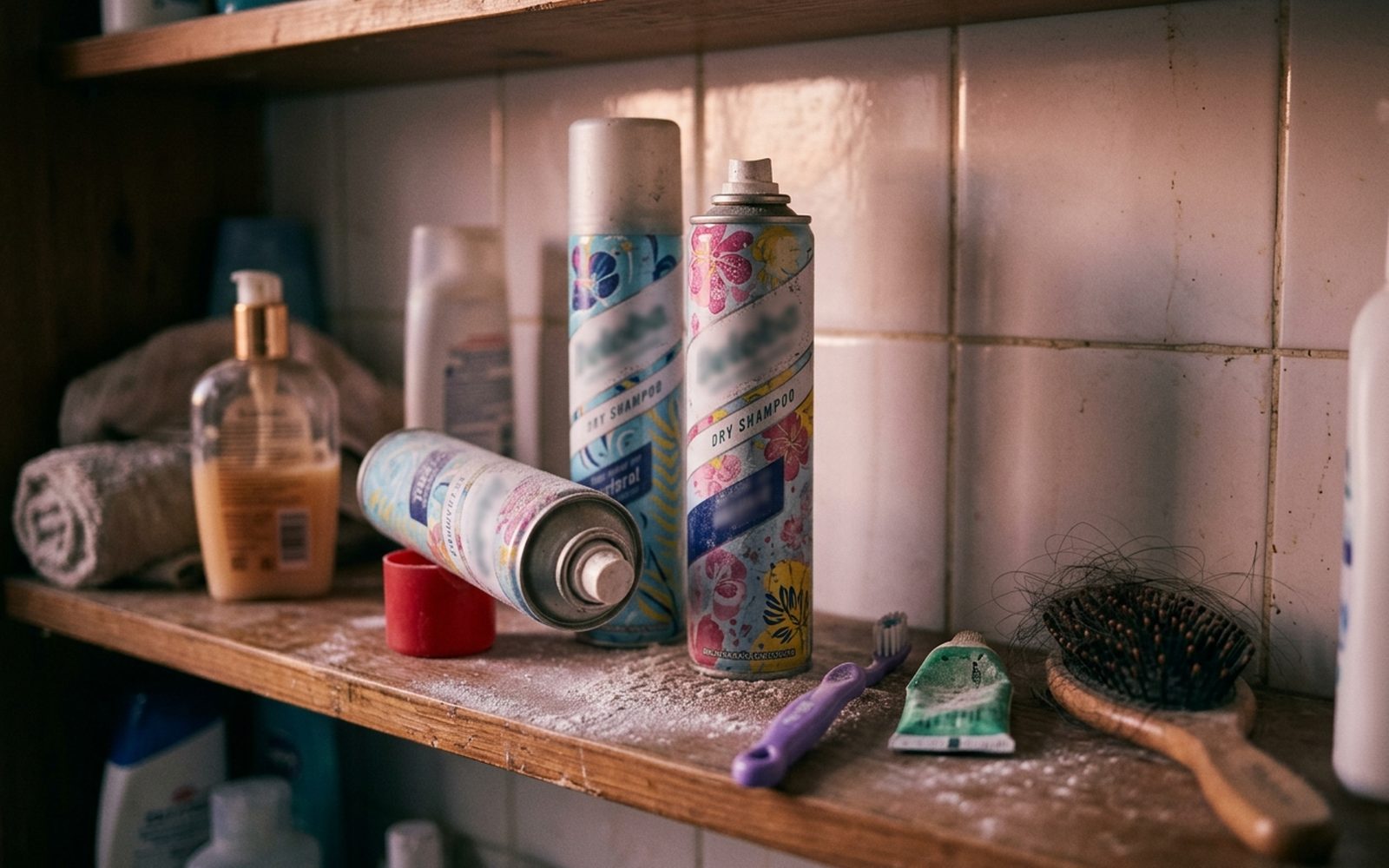
Dry shampoo is a starch or clay powder — rice starch, tapioca, sometimes kaolin — carried in an aerosol propellant with fragrance. The powder absorbs oil at the root and makes the hair look clean and feel fuller. It does not clean anything. The oil, the dead skin, yesterday’s dry shampoo and the day before’s are all still there, now bound together in a film on the scalp.
What that film does
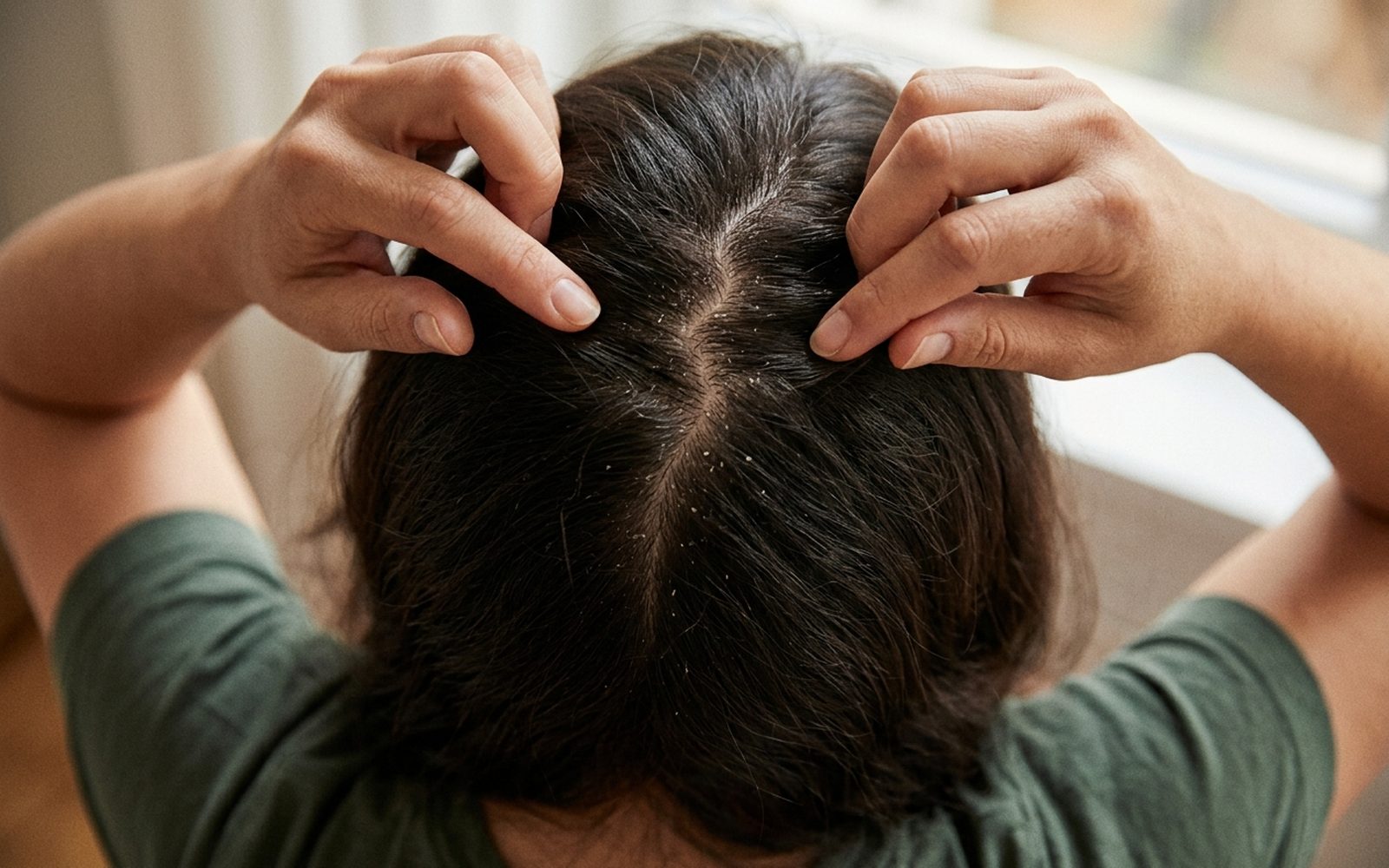
Three things, all of them slow. It blocks the follicle opening, so that sebum backs up and the skin around the follicle becomes inflamed; you feel that as itch and tenderness, and sometimes see small red bumps at the parting. It feeds the yeast that causes dandruff, which is why heavy dry shampoo users so often have flakes they have never had before. And it weighs the hair down at the root, so that by day three the hair that dry shampoo made look full on day one looks flatter than it did before.
What it does not do is make hair fall out from the follicle. The horror stories about dry shampoo causing bald patches are almost always about a scalp condition that the dry shampoo aggravated, not caused. But an inflamed, clogged scalp grows hair badly, and if you are trying to regrow a parting, a scalp that is under a week of powder is working against you.
Not sure which one is you?
Take the two-minute hair quiz
Twelve quick questions. We tell you what we think is going on, what to do about it, and we say so if it is something we cannot help with.
Start the quiz →The rules for using it without harm
Two days in a row, maximum. Then wash. Three days of build-up is where the itch starts.
Spray the hair, not the scalp. Hold the can at least twenty centimetres away and aim at the roots from the side, not straight down onto the parting. Most people spray a white cloud directly onto the skin.
Apply it the night before, not the morning after. Sprayed onto clean-ish hair before bed, it absorbs oil as it is produced overnight and the hair looks better in the morning with less product. Sprayed onto greasy hair at 7am, it needs twice as much to do half the job.
Brush it out. Wait a couple of minutes for it to absorb, then brush thoroughly. Anything left in the roots is the film.
Wash it out properly when you do wash. Two shampoos, fingertips on the scalp for a full minute the second time. Once a week, a clarifying shampoo instead. If you have hard water, a chelating shampoo does both jobs — more here.
If you use it because you cannot wash often
The honest answer for most mums is that hair-washing lost its slot in the day. Two things help. The first is that scalp-only washing is a real technique: shampoo the roots at the sink in three minutes, wrap the lengths in a towel, and do not condition. The second is that a scalp washed every two or three days actually produces less oil over time than one washed weekly and dry-shampooed in between, because the oil glands respond to how much oil is sitting on the skin.
Where it fits in the bigger picture
Dry shampoo is a scalp-hygiene problem, and scalp hygiene is a floor, not a ceiling: a clean, calm scalp grows hair as well as the follicle allows, and no better. If your parting is still widening on a well-cared-for scalp, the reason is at the follicle. The scalp guide covers the skin; the hairline article covers what lies beneath it.
Ready to read your own pattern?
Take the two-minute hair quiz
Twelve questions. We tell you what we think is going on for you, and we say so if it is something a GP should see first.
Start the quiz →