Habits
Silk pillowcases: what they do, what they don’t, and whether to bother

I am asked about silk pillowcases at least weekly, usually with the tone of someone who suspects they have been sold something. The honest position is that they do one thing, they do it well, and it happens to be a thing that matters more for fine and thinning hair than for anyone else.
What they do
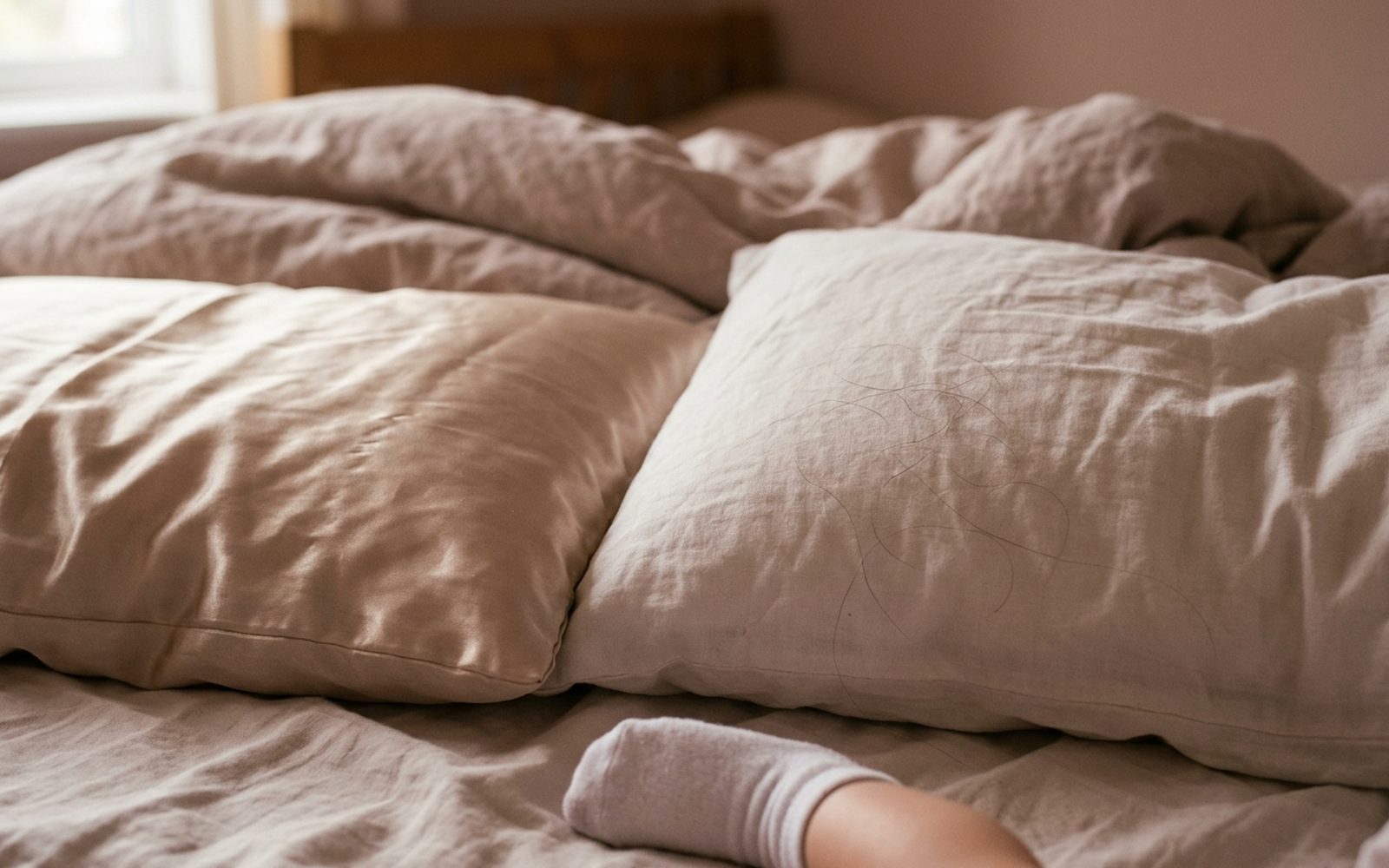
Reduce friction. Cotton and polyester have a rough, absorbent surface; a head turning on it through the night drags the hair across it hundreds of times. On thick hair that produces frizz. On fine hair — and especially on the finer, more fragile hair a struggling follicle produces — it produces breakage, particularly at the crown and the hairline where the head contacts the pillow. Silk and good satin are smooth, so the hair slides rather than drags. Women who switch commonly notice fewer hairs on the pillow within a week and fewer short broken hairs at the crown within a couple of months.
They also absorb less moisture than cotton, so the hair and skin are marginally less dry in the morning, which matters in a centrally heated winter.
What they do not do
They do not affect the follicle. They do not reduce shedding — the hairs the follicle has released will come out on any pillow — and they do not regrow anything. Any claim beyond “less friction, less breakage” is marketing.
Not sure which one is you?
Take the two-minute hair quiz
Twelve quick questions. We tell you what we think is going on, what to do about it, and we say so if it is something we cannot help with.
Start the quiz →Silk versus satin
Silk is the fibre; satin is a weave that can be made of silk or polyester. A polyester satin pillowcase costs a fraction of a silk one and does the friction job almost as well. Silk breathes better and lasts longer if washed carefully; polyester satin is easier to wash. For hair alone, either is fine. Look for a smooth, tightly woven surface; the cheaper the satin, the more it pills, and pilled satin is rougher than cotton.
The alternatives
A silk or satin sleep bonnet or a loose silk scarf over a plait does the same and travels. A loose low plait on a cotton pillow is halfway there. Sleeping with hair down and loose on cotton is the worst of the options; a tight bun on any pillow is worse still.
Where it fits
A silk pillowcase is a small, cheap, permanent reduction in breakage. It is one of about six habits — the routine article lists the rest — that between them keep the hair a follicle makes from being lost before it reaches full length. It is worth doing. It is not worth expecting anything from beyond that, and if the parting is still widening on a silk pillow, the answer is at the follicle, not in the bedding.
Ready to read your own pattern?
Take the two-minute hair quiz
Twelve questions. We tell you what we think is going on for you, and we say so if it is something a GP should see first.
Start the quiz →