Hormones
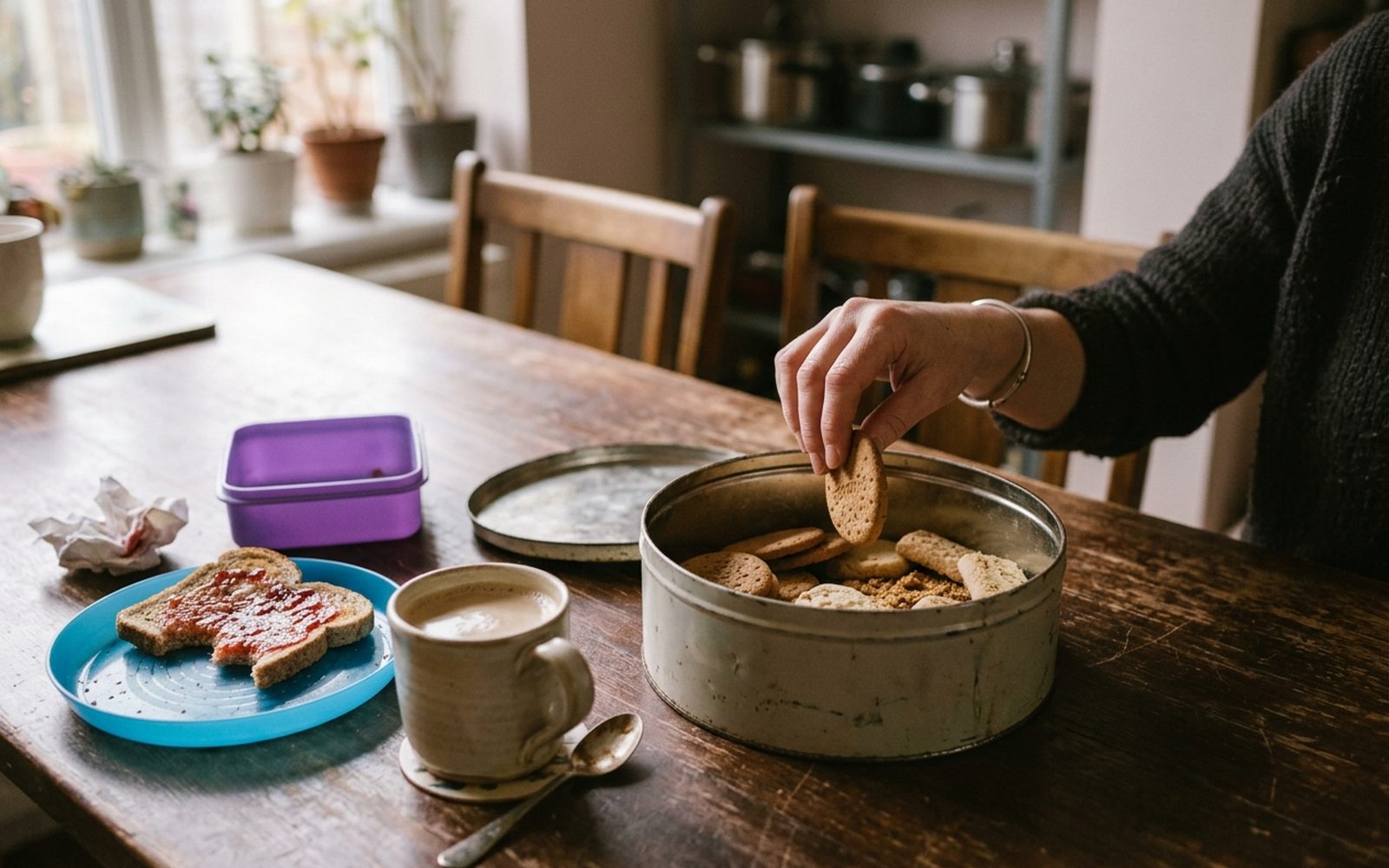
Sugar, insulin and the follicle: the biscuit tin and the parting

This is the link between what is on the kitchen table and what is on the parting, and it is not about weight. Women of every size can be insulin resistant, and the follicle responds to the insulin, not the scales.
What insulin does to the follicle
Insulin is the hormone that moves sugar from the blood into cells. When cells stop responding to it properly — insulin resistance — the body makes more, and high insulin does two things that matter for hair. It tells the ovaries to make more androgen, and it lowers the protein (SHBG) that keeps androgens bound and inactive in the blood, so more free testosterone reaches the follicle. In follicles that are androgen-sensitive, that means more miniaturisation at the temples, parting and crown. Insulin resistance is also inflammatory, and inflammation around the follicle slows every cycle.
The evidence is clear enough that a diagnosis of female pattern hair loss in a woman under 45 is, in many clinics, a prompt to check for insulin resistance.
Who is affected
Women with PCOS, most obviously. Women who gained weight in pregnancy that has not shifted, particularly around the middle. Women with a family history of type 2 diabetes. Women who had gestational diabetes. And a great many mums with none of the above, whose days run on broken sleep (which itself causes insulin resistance within days), snatched carbohydrate, no protein until the evening, and no time to move. That describes most of the women in my clinic.
Not sure which one is you?
Take the two-minute hair quiz
Twelve quick questions. We tell you what we think is going on, what to do about it, and we say so if it is something we cannot help with.
Start the quiz →How to know
A fasting glucose and an HbA1c from the GP catch established problems but miss early insulin resistance. A fasting insulin, if you can get it, is more useful; a triglyceride-to-HDL ratio from a standard lipid panel is a reasonable proxy. Signs without a test: a waist over 80 cm, skin tags on the neck, darkened skin in the folds of the neck or armpits, an afternoon crash, and hunger that returns an hour after eating.
The four changes
Protein first, at every meal. Twenty-five to thirty grams before the carbohydrate. It blunts the insulin spike from what follows and keeps you full until the next meal. This one change does more than any other. How to do it on a mum’s day.
Move after eating. Ten minutes of walking after a meal lowers the blood sugar rise by a third. The school run after breakfast, the buggy walk after lunch, the tidy-up after tea all count.
Lift something twice a week. Muscle is where sugar goes; more muscle, more room. Two twenty-minute sessions with a kettlebell, a resistance band or bodyweight is enough to change insulin sensitivity within a month.
Sleep, as much as the house allows. One bad night raises insulin resistance by around a quarter the next day. What helps when it is not coming back.
What is not on the list: cutting out every carbohydrate. That is not sustainable with children, and the crash diet it becomes triggers a shed. Swap white for wholegrain, biscuits for fruit and nuts, fizzy drinks for water; keep the potatoes.
Where it fits
Insulin resistance turns up the androgen signal at a follicle that was already sensitive. Lowering it turns the signal down, slowly; it does not restart follicles that have gone quiet or reverse miniaturisation on its own. That is done at the follicle. The two together — less androgen arriving, and a follicle better able to respond — is the combination that shows in the parting at six months. The DHT article explains the other half.
Ready to read your own pattern?
Take the two-minute hair quiz
Twelve questions. We tell you what we think is going on for you, and we say so if it is something a GP should see first.
Start the quiz →